My hat is off to the boys at The Pirate Bay for their ridicule of the ways that media companies continue to push the little guys around. Seriously though, the little guys definately could use some backbone, and these boys have it.
Wired published an article about these guys in action, most amusing is the legal threats they get from media companies and their responses. Takes some balls to pull it off, apparently there is quite the movement in Sweden that there is actually a political party comming together that supports piracy (see wired article). For all the time it took to finally see this happen, I am comming to the conclusion it is easier to organize a small group of influential people than it is to coordinate a mob of... well less influential people (for the lack of a better term).
I do wonder, how does a small group of media companies have the right to enforce their will upon millions of people? Not that I'm saying it's wrong (I choose not to pick a side for this article), but if this were a battlefield, they'd be crushed a million to one. If this were true, then the death knell would already be sung, the media industry would be dead and the public (most likely) would be at a loss (for me, I probably could care less in most cases). Would the public lament if this were the result? Probably, but let the will of the majority have their way. If they screw up, they'll learn it the hardway and be the better for it. If it doesn't turn out the way we want, then we'd be the better off either way. What is there to lose? Just the rich guys, who don't really care about us.
Wednesday, March 15, 2006

Monday, March 06, 2006
The Short Date Problem
Excerpt from a conversation from a Canadian friend of mine over a sushi lunch. My friend, finishes her lunch in half the time it takes me to eat my food.
Me: Are your dates short by any chance?
Her: Yeah, I don't know why.
Need I say more?
Me: Are your dates short by any chance?
Her: Yeah, I don't know why.
Need I say more?
Sunday, March 05, 2006
Hina Matsuri -- Girl's Festival
Hina-matsuri, also known as girl's festival in Japan... also known as doll's festival where the Japanese pray for the well being of their girls. The girls end up getting taken out by their family for a dinner and occasionally dress up in kimonos. I finished my presentation on Friday and jetted from the lab to hit the festival as my way of celebrating for working like mad on my presentation. Enjoy the pictures!


That's Xavier, from France, yeah I guess I can see why girls can dig French guys :)

A normal picture!

Now with 50% more smile!

My presentation suit (western Kimono?) with the ladies

Some people thought we were married :P

The Kimono master putting on my clothes ("Excuse me, you're going to have to take off your clothes!")

General sillyness

More general sillyness!
I've got more but, I'm sure you get the idea :)
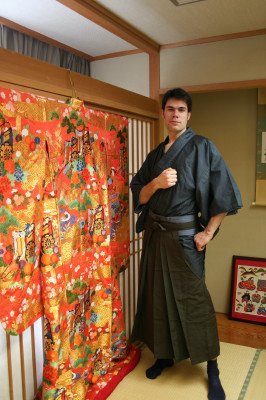
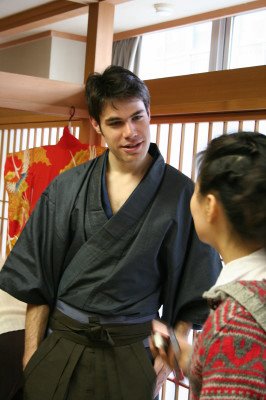
That's Xavier, from France, yeah I guess I can see why girls can dig French guys :)
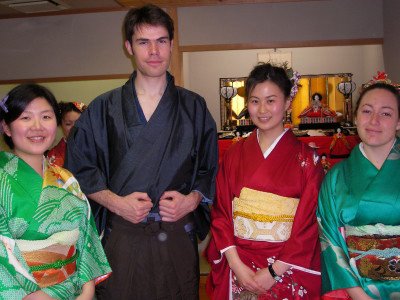
A normal picture!
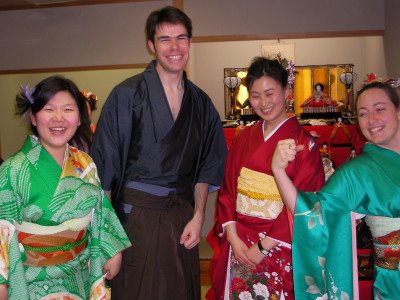
Now with 50% more smile!
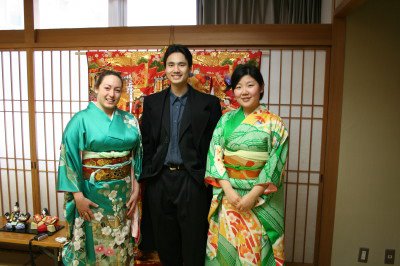
My presentation suit (western Kimono?) with the ladies
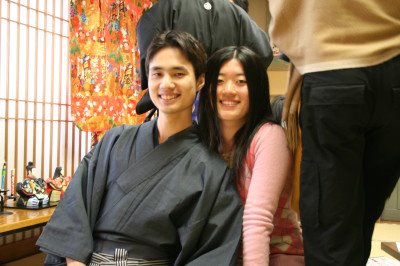
Some people thought we were married :P
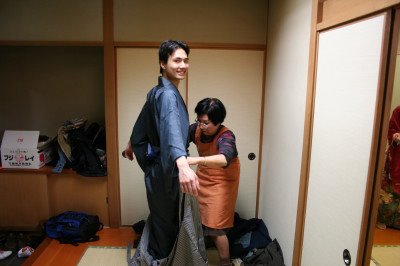
The Kimono master putting on my clothes ("Excuse me, you're going to have to take off your clothes!")
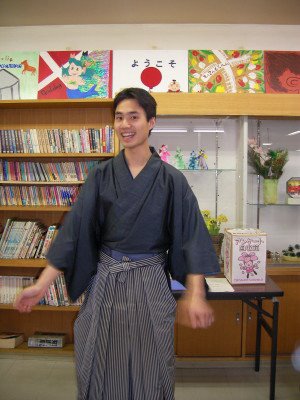
General sillyness
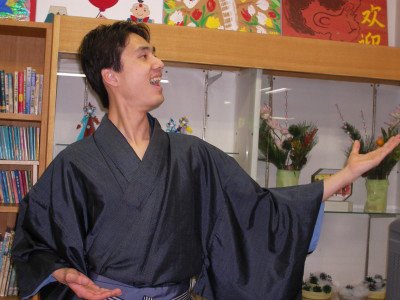
More general sillyness!
I've got more but, I'm sure you get the idea :)
Playing with my camera
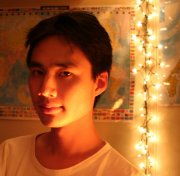
I was doing some playing around with the lighting in my room this evening, (more like at 3:30 am) and came up with this. Um yeah... I love my camera :)
I'll be posting pictures later on a Japanese event to last Friday later on. I've been up a while and need some sleep.
Thursday, March 02, 2006
So I lied... and Comments on Public Speaking
Turns out that I don't have access to the server's webspace at the lab, meaning that I can't post my presentation online. I'll do a write up instead later on. Ooops.
I went to University today to attend the department wide presentation series, where the graduate students will be presenting. I'll eat my words from my previous posts and tell you up front that these presentations *weren't* as stupid as I initially thought. (Note: It's important to keep track of things that come out differently than you initally thought because it keeps you honest, and I personally think that's very important).
Presentation format: 10 minutes to speak, 10 minutes question/comment period. Professors from other labs attend to give comments from a different perspective from instead of just your own advisor. Students are encouraged to be active (and also required to attend 10 lectures and ask atleast 1 question from all of them). This is a decent format because it gets people to stick to the point.
I've found the presentations to have some varience in quality some have been quite good and the rest pretty okay and the good presenters are able to answer questions in a thoughful manner. So I'll have to revise my position on the Japanese students that they're not as bad as I initially thought-- I needed to get out of my little hole and see the world.
My presentation occurs tomorrow morning and I'm currently rehearsing in my room. I am very comforable presenting in an informal situation with just a few penned out notes and a chalkboard or something. I have all the freedom to go wherever I want. The problem with a power point presentation is that I'm stuck to what I've got written down. At different times I'll be thinking differently and often if I were to make the same presentation informally, it'll be subtly different depending on how I am thinking at the time. But I'll still be making the same main points and I don't necessarly have to follow my format.
It's kind of fascinating discovering that my mind works like this. I've written about this once but I'll not bother link to it (it's an essay on language I've written over the summer and I made a link to it last month or so). But say if this post was deleted in a crash right now. I'd still have the same ideas, but you can be sure that it'll turn out slightly differently. It's something like that. I wonder if this is how the brain compresses information (or is it something I learned to do because I like to find ways of remembering the most with least amount of effort [ie. I like to remember the main ideas and re-figure out the details as I go along.. saves on the memorizing]).
Wish me luck on my presentation.
As for tomorrow, I'm going to celebrate in a cool kind of way. I'm going to jet out of the University to check out a festival called "Hina-Matsuri" where girls go out and dress up in Kimonos. So I'll be in my suit after my presentation and I'm going out take pictures with them. Not a bad way to celebrate to me :)
I went to University today to attend the department wide presentation series, where the graduate students will be presenting. I'll eat my words from my previous posts and tell you up front that these presentations *weren't* as stupid as I initially thought. (Note: It's important to keep track of things that come out differently than you initally thought because it keeps you honest, and I personally think that's very important).
Presentation format: 10 minutes to speak, 10 minutes question/comment period. Professors from other labs attend to give comments from a different perspective from instead of just your own advisor. Students are encouraged to be active (and also required to attend 10 lectures and ask atleast 1 question from all of them). This is a decent format because it gets people to stick to the point.
I've found the presentations to have some varience in quality some have been quite good and the rest pretty okay and the good presenters are able to answer questions in a thoughful manner. So I'll have to revise my position on the Japanese students that they're not as bad as I initially thought-- I needed to get out of my little hole and see the world.
My presentation occurs tomorrow morning and I'm currently rehearsing in my room. I am very comforable presenting in an informal situation with just a few penned out notes and a chalkboard or something. I have all the freedom to go wherever I want. The problem with a power point presentation is that I'm stuck to what I've got written down. At different times I'll be thinking differently and often if I were to make the same presentation informally, it'll be subtly different depending on how I am thinking at the time. But I'll still be making the same main points and I don't necessarly have to follow my format.
It's kind of fascinating discovering that my mind works like this. I've written about this once but I'll not bother link to it (it's an essay on language I've written over the summer and I made a link to it last month or so). But say if this post was deleted in a crash right now. I'd still have the same ideas, but you can be sure that it'll turn out slightly differently. It's something like that. I wonder if this is how the brain compresses information (or is it something I learned to do because I like to find ways of remembering the most with least amount of effort [ie. I like to remember the main ideas and re-figure out the details as I go along.. saves on the memorizing]).
Wish me luck on my presentation.
As for tomorrow, I'm going to celebrate in a cool kind of way. I'm going to jet out of the University to check out a festival called "Hina-Matsuri" where girls go out and dress up in Kimonos. So I'll be in my suit after my presentation and I'm going out take pictures with them. Not a bad way to celebrate to me :)
Wanna know what I do? Part 1
I've been saying that I'd tell everyone what my research project is for the last little while. Since I've been preparing for my seminar happening this Friday, I've been spending the week preparing handouts and slides for my 10 minutes worth of fame this Friday. I figure that now is a better time than any to introduce my work to you (sort of).
Let me start with my first research project, (I will post my current project later today when I can post my presentation online).
Since comming to this lab, I was interested in developing micro-machined wireless communication devices and was looking for medical applications. I was initially set to work on a micro-technology implantable based glucose sensor and spent my first month at the lab researching papers and reading online materials to figure out what is going on in the field.
The proposed system was to use a semi-permiable membrane (remember that word from high-school science?) to glucose that would let glucose diffuse into a chamber containing a sensitive fluid. This fluid would change viscosity which is telling of current body glucose concentrations (note: viscosity is how sticky a fluid is). The viscosity could be detected using a vibrating cantiliver (read: vibrating stick) in the chamber that could be excited by an ultra-sonic pulse from outside of the body (think: sound exciting a tuning fork). You see, the viscosity of the glucose sensitive fluid would determine the vibrating frequency of the cantiliver. This means that if I listen to the cantiliver, I can determine the glucose concentration in the body using ultrasound. Get it? I'm sure you did (research doesn't necessarily have to be tough).
After doing some reading on biotech MEMs technology, I had reached the conclusion that this device would *suck.* The human body has an inherent reaction to foreign objects implented the body by covering them in the body with an isolating protein layer from reading bio-tech books. What this means is that the sensitive permiable membrane gets covered after a few months and is rendered useless. Immuno responses to implanted microsensors that require a physical interface to the inside of the body are impractical. This means that until we figure out a way to prevent the body from gumming up the sensors like these, these sensors are useless. But to solve this, is an entirely different problem (which is also not in my realm of expertise).
Had I accepted the projet at face value, I would have been screwed. Remember, do your homework properly because it'll save you from trouble and reward you later. Read on.
So what next? I discovered some technology being developed by Animas Corporation, who have a bright idea (literally) on the subject. They are currently developing technology to use light in an implantable sensor to determine glucose concentration. By observing how much light is absorbed (or was it frequency? I don't remember anymore), they can determine glucose concentration. The smart thing is that this technology is using light frequencies that don't get blocked by the insulating protein later. Smart, no? There is a detail of keeping it powered, meaning they are going to need either a battery or a wireless way of transmitting power, but I think those are more managable problems.
Anyways, I thought that it was much smarter than my idea (and my professors weren't too keen on my idea of using micro-needle patches on the outside of the body as a work around) that I decided to drop the project all together. Animas corporation was bought out by Johnson and Johonson a month later after I finished my analysis, sending the stock of Animas Corpotation to spike by 33% in a day in December of 2005. I was on the money for my analysis. Too bad I didn't put my money where my mouth was.
My real project will be posted later tomorrow.
Let me start with my first research project, (I will post my current project later today when I can post my presentation online).
Since comming to this lab, I was interested in developing micro-machined wireless communication devices and was looking for medical applications. I was initially set to work on a micro-technology implantable based glucose sensor and spent my first month at the lab researching papers and reading online materials to figure out what is going on in the field.
The proposed system was to use a semi-permiable membrane (remember that word from high-school science?) to glucose that would let glucose diffuse into a chamber containing a sensitive fluid. This fluid would change viscosity which is telling of current body glucose concentrations (note: viscosity is how sticky a fluid is). The viscosity could be detected using a vibrating cantiliver (read: vibrating stick) in the chamber that could be excited by an ultra-sonic pulse from outside of the body (think: sound exciting a tuning fork). You see, the viscosity of the glucose sensitive fluid would determine the vibrating frequency of the cantiliver. This means that if I listen to the cantiliver, I can determine the glucose concentration in the body using ultrasound. Get it? I'm sure you did (research doesn't necessarily have to be tough).
After doing some reading on biotech MEMs technology, I had reached the conclusion that this device would *suck.* The human body has an inherent reaction to foreign objects implented the body by covering them in the body with an isolating protein layer from reading bio-tech books. What this means is that the sensitive permiable membrane gets covered after a few months and is rendered useless. Immuno responses to implanted microsensors that require a physical interface to the inside of the body are impractical. This means that until we figure out a way to prevent the body from gumming up the sensors like these, these sensors are useless. But to solve this, is an entirely different problem (which is also not in my realm of expertise).
Had I accepted the projet at face value, I would have been screwed. Remember, do your homework properly because it'll save you from trouble and reward you later. Read on.
So what next? I discovered some technology being developed by Animas Corporation, who have a bright idea (literally) on the subject. They are currently developing technology to use light in an implantable sensor to determine glucose concentration. By observing how much light is absorbed (or was it frequency? I don't remember anymore), they can determine glucose concentration. The smart thing is that this technology is using light frequencies that don't get blocked by the insulating protein later. Smart, no? There is a detail of keeping it powered, meaning they are going to need either a battery or a wireless way of transmitting power, but I think those are more managable problems.
Anyways, I thought that it was much smarter than my idea (and my professors weren't too keen on my idea of using micro-needle patches on the outside of the body as a work around) that I decided to drop the project all together. Animas corporation was bought out by Johnson and Johonson a month later after I finished my analysis, sending the stock of Animas Corpotation to spike by 33% in a day in December of 2005. I was on the money for my analysis. Too bad I didn't put my money where my mouth was.
My real project will be posted later tomorrow.
Tuesday, February 28, 2006
Backbone and Revolution
I don't know if this is going to bite me in the ass one day, but I'd rather put myself on the block for something that means something to me instead of just dealing with it.
I made a stand for what I believed in a while back at lab. There are things peculiarly wrong about it-- like the way students are learning, poor guidance, no real motivation or indepth understanding. Even I do not understand the full extent of this problem, I don't grasp it all but I can feel it.
The first years masters students are preparing for a department wide seminar occuring this Thursday and Friday. All students are expected to make a presentation and attend atleast ten (10) other seminars which are 20 minutes long. Students have been preparing 7~8 hours+ writing a 3~4 page handout. I talked to a Korean student about how things were going for him... I told him how I felt about this presentation-- ie. that it was rather stupid that we spend so long for a short presentation. He agreed with me and then we got into a conversation about how he is very bored with his reserach. The reason being that he doesn't understand much of it.
Electrical Engineer by training and working on a mechanical system (thermally actuated mirror using a laser). It seems to me that he's expected to produce something when he doesn't understand the basic principles behind what he is doing. Studying something in depth takes time, possibly like a few weeks or more but everyone is afraid of looking like they're not producing... "they've got to be doing something."
He wants to change reserach themes, I think this is do able because he has another year left at the lab. Masters students do their thesis in 1 year in Canada and America, during their second year, yet he is afraid of switching themes (I know of one other student that did here). He's afraid of telling the professor that he isn't happy with this theme, he's also worried if he will have enough time to finish a new theme if he does get one. He's also worried about switching advisors from within the lab (we have 4 advisors) feeling like he'd be backstabbing the guy he's working under. Working like this can be very freightening for a person in this situation. I've been there before in parts of my undergrad life and the inital part of my life here in Japan.
If there is one thing I have learned from living in Japan, it's that life isn't solely about keeping other people happy while giving up on your own. It takes backbone to disappoint or take criticism but I'd rather disappoint (or take criticism) rather than suffer. The only person that is responsible for your happieness is you and if you can't take responsibility for it, well, you'll get whatever that's comming to you.
I spent a good part of my evening last night talking to my labmate after midnight. I spent atleast an hour telling him to switch. He kept worrying that the professor would not be happy about it. Can you imagine people thinking like that (even his advisor is pretty nice too)? But I can... but even so, to hell with it.
I joined another conversation happening in another part of the lab about problems that students weren't learning here (like at 2 am). The guy I was taking to is Japanese and he's been in this lab since 4th year Undergrad and is moving into his 2nd year in his Phd. 5 years he's been here. This is the first time I heard him talk about this, but from what I learned, there are many others that are unhappy about how things going on here. The PhD students have been working on and giving seminars on some of the fundamentals of MEMs processing (only say 3 so far) which I feel do not meet all the needs of the new students that come into the lab... but it is somewhat of a good start.
This is the first time we've talked like this since the day I made my presentation to try and change things at the lab... and I only so happened to stumble into this conversation. If anyone believed in what I was saying, why didn't anyone step up to me sooner? Communication problems anyone? I hardly got any responses from the students from when I did make my presentation over a month ago.
What transpired from my conversation from the PhD student is that there are others in the lab that don't feel well supported in knowledge or guidance. He don't know what do to about it. But one thing we've both agreed on, is that asking the professors to change things isn't going to work. So what do we do?
He's asked me what would I do if I was the head of the Saturday meetings (because he doing that job now). I told him the first thing I'd do is cancel it because it's useless. He asks me what I would do to encourage knowledge sharing? Hold formal discussion groups and schedule them in? I don't know about you, but you just can't mandate information sharing or an open discussion forum. If it's one thing that I feel these people don't understand, it's how to inspire real motivation. Because there is a difference between just going through the motions vs really doing something because it means something to you. But most fundamentally, we need to find ways of learning because right now, the proffs are sure as hell not doing a good job of teaching.
I talked to another friend of mine, a masters student from China. She's lost interest in her project and the only thing that she's focusing on right now is trying to get a job in Japan. Right now, I have mixed feelings about getting a job in Japan because of this. I told her that "what's the point of finding a job if the working culture is similar to lab culture" (and by working culture, many people want to go corporate I'm not sure if it is different or not). All she told me afterwards was "that's probably true, wonder what'd I do." In English this sounds absurd, but I've heard it in Japanese on several occasions, like it was something natural (you might even be fooled into start thinking it's natural). I think it's absurd.
Honestly, I do want to change this lab. This lab is one of the best equpped labs in Japan and had a history of great work. I have heard that the old students of 5~6 years ago were really keen but they are now gone and no one knows how to foster the right atmosphere to bring out the best out of people. It is kind of sad that things are in this state right now.
So what am I going to do? For now, I'm going to sit down and talk to the other lab people and see how they feel and if they have any desire to try and change things from the bottom up. I've heard so far from my Chinese friend that she's given up on it and is going to live with it, I've heard a few more responses like that too. If that is what people feel like here, then I'm fully willing to pack up and leave (well not yet, everyone has full access to all equipment here, the problem is learning how to use them... and that does seem kind of fun to me). Atleast, I feel I'm lucky that I do keep a life out of lab and that I'm satisfied with many other things that I've learned out here... it's unfortunate that I can't say the same for the rest of them.
Anyways, excuse the babble. Even I don't see clearly about this, this whole thing is still jumbled in my mind, it probably shows in the writing.
I made a stand for what I believed in a while back at lab. There are things peculiarly wrong about it-- like the way students are learning, poor guidance, no real motivation or indepth understanding. Even I do not understand the full extent of this problem, I don't grasp it all but I can feel it.
The first years masters students are preparing for a department wide seminar occuring this Thursday and Friday. All students are expected to make a presentation and attend atleast ten (10) other seminars which are 20 minutes long. Students have been preparing 7~8 hours+ writing a 3~4 page handout. I talked to a Korean student about how things were going for him... I told him how I felt about this presentation-- ie. that it was rather stupid that we spend so long for a short presentation. He agreed with me and then we got into a conversation about how he is very bored with his reserach. The reason being that he doesn't understand much of it.
Electrical Engineer by training and working on a mechanical system (thermally actuated mirror using a laser). It seems to me that he's expected to produce something when he doesn't understand the basic principles behind what he is doing. Studying something in depth takes time, possibly like a few weeks or more but everyone is afraid of looking like they're not producing... "they've got to be doing something."
He wants to change reserach themes, I think this is do able because he has another year left at the lab. Masters students do their thesis in 1 year in Canada and America, during their second year, yet he is afraid of switching themes (I know of one other student that did here). He's afraid of telling the professor that he isn't happy with this theme, he's also worried if he will have enough time to finish a new theme if he does get one. He's also worried about switching advisors from within the lab (we have 4 advisors) feeling like he'd be backstabbing the guy he's working under. Working like this can be very freightening for a person in this situation. I've been there before in parts of my undergrad life and the inital part of my life here in Japan.
If there is one thing I have learned from living in Japan, it's that life isn't solely about keeping other people happy while giving up on your own. It takes backbone to disappoint or take criticism but I'd rather disappoint (or take criticism) rather than suffer. The only person that is responsible for your happieness is you and if you can't take responsibility for it, well, you'll get whatever that's comming to you.
I spent a good part of my evening last night talking to my labmate after midnight. I spent atleast an hour telling him to switch. He kept worrying that the professor would not be happy about it. Can you imagine people thinking like that (even his advisor is pretty nice too)? But I can... but even so, to hell with it.
I joined another conversation happening in another part of the lab about problems that students weren't learning here (like at 2 am). The guy I was taking to is Japanese and he's been in this lab since 4th year Undergrad and is moving into his 2nd year in his Phd. 5 years he's been here. This is the first time I heard him talk about this, but from what I learned, there are many others that are unhappy about how things going on here. The PhD students have been working on and giving seminars on some of the fundamentals of MEMs processing (only say 3 so far) which I feel do not meet all the needs of the new students that come into the lab... but it is somewhat of a good start.
This is the first time we've talked like this since the day I made my presentation to try and change things at the lab... and I only so happened to stumble into this conversation. If anyone believed in what I was saying, why didn't anyone step up to me sooner? Communication problems anyone? I hardly got any responses from the students from when I did make my presentation over a month ago.
What transpired from my conversation from the PhD student is that there are others in the lab that don't feel well supported in knowledge or guidance. He don't know what do to about it. But one thing we've both agreed on, is that asking the professors to change things isn't going to work. So what do we do?
He's asked me what would I do if I was the head of the Saturday meetings (because he doing that job now). I told him the first thing I'd do is cancel it because it's useless. He asks me what I would do to encourage knowledge sharing? Hold formal discussion groups and schedule them in? I don't know about you, but you just can't mandate information sharing or an open discussion forum. If it's one thing that I feel these people don't understand, it's how to inspire real motivation. Because there is a difference between just going through the motions vs really doing something because it means something to you. But most fundamentally, we need to find ways of learning because right now, the proffs are sure as hell not doing a good job of teaching.
I talked to another friend of mine, a masters student from China. She's lost interest in her project and the only thing that she's focusing on right now is trying to get a job in Japan. Right now, I have mixed feelings about getting a job in Japan because of this. I told her that "what's the point of finding a job if the working culture is similar to lab culture" (and by working culture, many people want to go corporate I'm not sure if it is different or not). All she told me afterwards was "that's probably true, wonder what'd I do." In English this sounds absurd, but I've heard it in Japanese on several occasions, like it was something natural (you might even be fooled into start thinking it's natural). I think it's absurd.
Honestly, I do want to change this lab. This lab is one of the best equpped labs in Japan and had a history of great work. I have heard that the old students of 5~6 years ago were really keen but they are now gone and no one knows how to foster the right atmosphere to bring out the best out of people. It is kind of sad that things are in this state right now.
So what am I going to do? For now, I'm going to sit down and talk to the other lab people and see how they feel and if they have any desire to try and change things from the bottom up. I've heard so far from my Chinese friend that she's given up on it and is going to live with it, I've heard a few more responses like that too. If that is what people feel like here, then I'm fully willing to pack up and leave (well not yet, everyone has full access to all equipment here, the problem is learning how to use them... and that does seem kind of fun to me). Atleast, I feel I'm lucky that I do keep a life out of lab and that I'm satisfied with many other things that I've learned out here... it's unfortunate that I can't say the same for the rest of them.
Anyways, excuse the babble. Even I don't see clearly about this, this whole thing is still jumbled in my mind, it probably shows in the writing.
Monday, February 27, 2006
A Ten Minute Presntation
A presentation occurs this Friday. It's a general presentation to students and faculty. I've got 10 minutes to present my material and 10 minutes of question period. All students are to provide handouts of their materials of approximately 2~4 pages. Ok fine, I'm working on the handouts now. But why oh why must preparing handouts take over 5~6 hours!? That I cannot figure out.
I have so far spent time wirting out a point form outline of what I wanted to write, jumped around through the other research papers I've read to reference information I've gathered. I've spent 2~3 hours writing material, inserted images from my own research and from other papers. Cross-referenced figures in my document.
Have the document reviewed by my professor, whom decides that I should remove some of my background work reserach and focus on what I have produced so far (the problem is that I haven't done enough analysis to talk about what data I have). I need to add simple sketches of my system which is taking me 2 hours to do in Adobe illustrator. I need to make another figure which might take me another hour so. Rewrite sections, add new information have it reviwed again.
Why does making a 10 minute presentation have to be so painful?
I've lectured calculus, physics, chemistry, computer science and English. I can lecture for easily an hour with little preparation with just pen and paper (a chalkboard would be even more fun). But why must writing handouts, making diagrams on the computer and blah blah blah take 6 hours+ to prepare for a 10 minute presentation? Ineffectiveness of publishing technology? Incompetence? I haven't a clue but if I can spend 30 mins to an hour preparing what I want to scribble down on a chalk board in advance (even that is being generous with time) to prepare for a 10 minute presentation, I'd take that in a heart-beat.
I've been in lab since 10:30 am and it's mid-night right about now. I'm not amused... the sick thing is that I'm getting used to it too (never thought that was even possible for me).
And I still have to prepare a powerpoint presentation. Grr!
I have so far spent time wirting out a point form outline of what I wanted to write, jumped around through the other research papers I've read to reference information I've gathered. I've spent 2~3 hours writing material, inserted images from my own research and from other papers. Cross-referenced figures in my document.
Have the document reviewed by my professor, whom decides that I should remove some of my background work reserach and focus on what I have produced so far (the problem is that I haven't done enough analysis to talk about what data I have). I need to add simple sketches of my system which is taking me 2 hours to do in Adobe illustrator. I need to make another figure which might take me another hour so. Rewrite sections, add new information have it reviwed again.
Why does making a 10 minute presentation have to be so painful?
I've lectured calculus, physics, chemistry, computer science and English. I can lecture for easily an hour with little preparation with just pen and paper (a chalkboard would be even more fun). But why must writing handouts, making diagrams on the computer and blah blah blah take 6 hours+ to prepare for a 10 minute presentation? Ineffectiveness of publishing technology? Incompetence? I haven't a clue but if I can spend 30 mins to an hour preparing what I want to scribble down on a chalk board in advance (even that is being generous with time) to prepare for a 10 minute presentation, I'd take that in a heart-beat.
I've been in lab since 10:30 am and it's mid-night right about now. I'm not amused... the sick thing is that I'm getting used to it too (never thought that was even possible for me).
And I still have to prepare a powerpoint presentation. Grr!
Thursday, February 23, 2006
Don't Trivialize the Math!
I was surfing the net today and came across an article about Willard Boyle, the man that co-developed the CCD or Charged Coupled Device (ie the imaging sensor used in almost all digital cameras) with George Smith. Nice stuff, he's Canadian (Boyle). My only disappointment is that the authors dumbed down the aritlce a little too much for my liking. When it came to describing how they developed the invention, the article describes it as:
They fiddled with some math and drew some sketches on the blackboard showing how this new device could be made. After not more than an hour and a half Boyle said, "OK, this looks pretty good."
If I could fiddle math like other people could fiddle the violin I'd be a (very) happy camper. I could care less about the CCD ray right about now.
I poked around the site where the Boyle article some more to find this, an article about a Canadian scientist that came up with a "Triple axis neutron spectroscope," for which he wond the Nobel Prize. What was www.science.ca's explanation of the development?
He fiddled with some math on his notepad for a while and then went to the coffee room. As he passed the lab that housed the radioactive nuclear pile, a controlled nuclear reaction that emitted one of the most powerful sources of neutrons in the world at the time, he wondered whether he could put it to use. In the coffee room he met Hurst. Brockhouse went up to the blackboard and said, “Don, there’s something I’d like to show you.” He sketched out some equations on the blackboard. The math described a device they could build that would use a neutron beam as a better type of spectrometer, a kind of flashlight that could probe into the mysteries of crystal structures and other solids such as metals, minerals, gems, and rocks.
Makes me wonder if I should've gone into the arts where I could learn a little more about "fiddling" and "sketching" mathematical equations. Really, I'm being sarcastic.
How did these guys get the math like this? and how do I get it? That's the million dollar question, literally. If you didn't get it: the Nobel Prize is 1 million dollars! Get it? See? [Har har]
They fiddled with some math and drew some sketches on the blackboard showing how this new device could be made. After not more than an hour and a half Boyle said, "OK, this looks pretty good."
If I could fiddle math like other people could fiddle the violin I'd be a (very) happy camper. I could care less about the CCD ray right about now.
I poked around the site where the Boyle article some more to find this, an article about a Canadian scientist that came up with a "Triple axis neutron spectroscope," for which he wond the Nobel Prize. What was www.science.ca's explanation of the development?
He fiddled with some math on his notepad for a while and then went to the coffee room. As he passed the lab that housed the radioactive nuclear pile, a controlled nuclear reaction that emitted one of the most powerful sources of neutrons in the world at the time, he wondered whether he could put it to use. In the coffee room he met Hurst. Brockhouse went up to the blackboard and said, “Don, there’s something I’d like to show you.” He sketched out some equations on the blackboard. The math described a device they could build that would use a neutron beam as a better type of spectrometer, a kind of flashlight that could probe into the mysteries of crystal structures and other solids such as metals, minerals, gems, and rocks.
Makes me wonder if I should've gone into the arts where I could learn a little more about "fiddling" and "sketching" mathematical equations. Really, I'm being sarcastic.
How did these guys get the math like this? and how do I get it? That's the million dollar question, literally. If you didn't get it: the Nobel Prize is 1 million dollars! Get it? See? [Har har]
Wednesday, February 22, 2006
Appartment Search!
I have 1 month to find a new place to stay. Currently searching with a Japanese guy and a gal from Calgary to find a new place to stay. Room mates might be fun, that is, if we can find a place to stay.
Doable, dunno. But we'll see how it goes. I'll post what I have learned with regards to appartment searching later on. But prices look somewhat comparable to what we pay back in Vancouver... for Sendai atleast and Sendai is very much like Vancouver population wise... also with beaches and mountains...???) Yeah, I really picked right, I'm living in the Japanese version of Vancouver sans the really pretty buildings we have in downtown.
Prices and my adventures talking with agents later on. First, I need a place to stay.
Wish me luck.
Doable, dunno. But we'll see how it goes. I'll post what I have learned with regards to appartment searching later on. But prices look somewhat comparable to what we pay back in Vancouver... for Sendai atleast and Sendai is very much like Vancouver population wise... also with beaches and mountains...???) Yeah, I really picked right, I'm living in the Japanese version of Vancouver sans the really pretty buildings we have in downtown.
Prices and my adventures talking with agents later on. First, I need a place to stay.
Wish me luck.
Sunday, February 19, 2006

Breaking Molds
So I've been at my lab for almost a year now (well sort of), officially accepted in October but been dropping in since April. I'll tell you a story about my life in lab and I want to let you guys know, as peachy and as much fun as I look like I'm having, there are some rough parts to life too. Who said that life was easy, right? And remember hindsight is 20/20 and that you can make things look like anything you like in hindsight...
When I first came to lab, I shared a set of desks with 2 professors and a research assistant. These people come in at 9:00 am and leave at midnight usually. I kid you not. Before I was officially accepted into lab, I came in in the afternoon hung out until the evening and then left. What I did was kind of crazy (more like scary for a normal person in the lab to do). I'm talking about this lab culture (not to be mistaken for other labs!) where people don't take their backpacks home in the evenings, the reason is because if they walk out with their backpacks everyone worries that the professors will know that they are going home. Heaven forbid that someone is going home EARLY, you know, like *before midnight.* No, it's just because it just feels a little embarassing to them.
I will have you know that not all labs are like this. There are other labs where the people are very cool, very friendly and easy going. Hell I played a little game with another lab where people played paper-scissors-rock with 12 people and the loser buys ice cream for everyone. It's silly but lots of fun (like many things in life).
For 4 months I stayed at my seat. Hell, I know that I didn't get along with one of the professors. The best part what that I sat in front for several months and I almost always came in later than him and left earlier.
I always said "good morning" or "hello" when I came into lab and I said "good night" or "bye" when I left. No one in lab ever says "good bye" to their professors when leaving. Honestly, I was always freaked when I said "bye" for the first while. Later on when other students graduated from the lab or moved up to other seats leaving vacancies in other parts of the lab, I was invited to move to another seat. Why? Because my seat was always the most "stressful seat" to sit in. I declined and decided to stick it out.
Part of me wanted to move to get out of that seat and another part of me wanted to stay to challange this culture. I learned this much, to anyone that is good at making choices, you have my respect. Making choices is real tough stuff, especially when it has implications for later on. Would it be something I regret later on? I wouldn't know. But I don't now, so things worked out (the entire lab got reorganized and the professors got their own desks away from me :P).
People feel like that they have to be working hard here. Fun? What is this fun you speak of? Work does not necessarly have to be serious, nor do you have to be serious while you work. Comming to these decisions (conclusions?) is not easy, life is exceptionally subtle, I will finally come to realize (I used to believe when I was younger that life was inherently obvious). There are many things that we take for granted, why things that the way they are... sometimes you just walk into a place and accept it for the what it is and sometimes because you're pulled into a spiralling trap without noticing it. I couldn't accept that lab life should be so serious. Don't get me wrong that everyone in lab is really serious, there are always exceptions and there are times when a few people are goofy. But do I need to explain everything with precision detail? Use your own reasonable judgement here...
But anyways, I am on a little bit of a tangent. Too many ideas in my head, screaming to get out. My only regret about the written medium is that it's linear and that one idea flows from one to the next. In reality, ideas are like nodes that inspire many other ideas. Remember that... anyways, back from tangent x2.
I am stating to become known for being the most "light hearted" person in lab. I leave early come in late sometimes and I do my best to disregard this entire "stress" thing. So far the professors have been happy about my presentations (though, presenting vs doing lots of real work are different things) so I've got a little bit of an image that I'm riding on. Realizing this, it becomes more so evident that if you can do the work efficiently put out some results that people are happy with then the amount of time you're spending at the lab shouldn't be an issue. But wait, it takes confidence to do that... and sometimes these people are a little lacking in that department (as for me, I think I'm gambling a little :P).
From now on my main working objectives is to work effectively as possible so I can make time to go out have fun or learn things that I'm interested in. Enough of this "pretending to work hard" bull crap, because if you're spending long hours at the lab, getting no reults (note, it is common for people to fall asleep at their desks here) and then get rapped on if you're a little behind then of course you're going to feel terrible! If you don't realize why things are happening the way they are then it'll eat you up pretty quick. I already know a few of the newly arrived students feeling the pressure, but for the most part, the other students are doing just fine.
Yeah, I have to say that the first part of my life here was a little rough and pretty stressful. It's easy to forget about the stress when things start to get better but there are times that I haven't slept well because of worrying too much. My 1 year anniversary of being in Japan is comming up and it's going to be interesting to look back at some old posts.
Moving to another country has been quite the educational experience.
When I first came to lab, I shared a set of desks with 2 professors and a research assistant. These people come in at 9:00 am and leave at midnight usually. I kid you not. Before I was officially accepted into lab, I came in in the afternoon hung out until the evening and then left. What I did was kind of crazy (more like scary for a normal person in the lab to do). I'm talking about this lab culture (not to be mistaken for other labs!) where people don't take their backpacks home in the evenings, the reason is because if they walk out with their backpacks everyone worries that the professors will know that they are going home. Heaven forbid that someone is going home EARLY, you know, like *before midnight.* No, it's just because it just feels a little embarassing to them.
I will have you know that not all labs are like this. There are other labs where the people are very cool, very friendly and easy going. Hell I played a little game with another lab where people played paper-scissors-rock with 12 people and the loser buys ice cream for everyone. It's silly but lots of fun (like many things in life).
For 4 months I stayed at my seat. Hell, I know that I didn't get along with one of the professors. The best part what that I sat in front for several months and I almost always came in later than him and left earlier.
I always said "good morning" or "hello" when I came into lab and I said "good night" or "bye" when I left. No one in lab ever says "good bye" to their professors when leaving. Honestly, I was always freaked when I said "bye" for the first while. Later on when other students graduated from the lab or moved up to other seats leaving vacancies in other parts of the lab, I was invited to move to another seat. Why? Because my seat was always the most "stressful seat" to sit in. I declined and decided to stick it out.
Part of me wanted to move to get out of that seat and another part of me wanted to stay to challange this culture. I learned this much, to anyone that is good at making choices, you have my respect. Making choices is real tough stuff, especially when it has implications for later on. Would it be something I regret later on? I wouldn't know. But I don't now, so things worked out (the entire lab got reorganized and the professors got their own desks away from me :P).
People feel like that they have to be working hard here. Fun? What is this fun you speak of? Work does not necessarly have to be serious, nor do you have to be serious while you work. Comming to these decisions (conclusions?) is not easy, life is exceptionally subtle, I will finally come to realize (I used to believe when I was younger that life was inherently obvious). There are many things that we take for granted, why things that the way they are... sometimes you just walk into a place and accept it for the what it is and sometimes because you're pulled into a spiralling trap without noticing it. I couldn't accept that lab life should be so serious. Don't get me wrong that everyone in lab is really serious, there are always exceptions and there are times when a few people are goofy. But do I need to explain everything with precision detail? Use your own reasonable judgement here...
But anyways, I am on a little bit of a tangent. Too many ideas in my head, screaming to get out. My only regret about the written medium is that it's linear and that one idea flows from one to the next. In reality, ideas are like nodes that inspire many other ideas. Remember that... anyways, back from tangent x2.
I am stating to become known for being the most "light hearted" person in lab. I leave early come in late sometimes and I do my best to disregard this entire "stress" thing. So far the professors have been happy about my presentations (though, presenting vs doing lots of real work are different things) so I've got a little bit of an image that I'm riding on. Realizing this, it becomes more so evident that if you can do the work efficiently put out some results that people are happy with then the amount of time you're spending at the lab shouldn't be an issue. But wait, it takes confidence to do that... and sometimes these people are a little lacking in that department (as for me, I think I'm gambling a little :P).
From now on my main working objectives is to work effectively as possible so I can make time to go out have fun or learn things that I'm interested in. Enough of this "pretending to work hard" bull crap, because if you're spending long hours at the lab, getting no reults (note, it is common for people to fall asleep at their desks here) and then get rapped on if you're a little behind then of course you're going to feel terrible! If you don't realize why things are happening the way they are then it'll eat you up pretty quick. I already know a few of the newly arrived students feeling the pressure, but for the most part, the other students are doing just fine.
Yeah, I have to say that the first part of my life here was a little rough and pretty stressful. It's easy to forget about the stress when things start to get better but there are times that I haven't slept well because of worrying too much. My 1 year anniversary of being in Japan is comming up and it's going to be interesting to look back at some old posts.
Moving to another country has been quite the educational experience.
Tuesday, February 14, 2006
Return from a Road Trip! (Picture Previews)
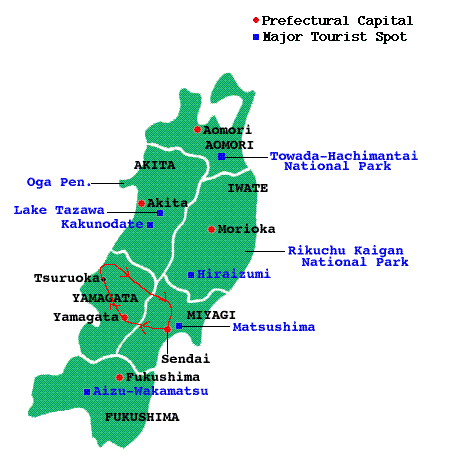 I spent this weekend on a road trip with Mike, myself and Mona. The 3 of us decided to rent a car for this weekend and headed out into the country side. After much discussion we randomly decided to head west into Yamagata prefecture for the weekend. The red lines lines on the left map wsa the route we took.
None of us knew what to expect for this trip, but suffice to say, I have pictures to show and stories to tell. I won't be able to post the whole spiel today as I'm at the lab at the moment, but I'll post up a short preview of our adventures.
So I lied, there was a particular reason why we wanted to head West this time around. For the past few months, I've been hearing on the news of the immense amount of snow fall in the western region of Japan.
Our first stop, I made a return to Yamadera, the mountain temple which I went to back in November of last year. For comparison's sake, I took a picture in November beside a post box the first time I went to Yamadera which looked like this:
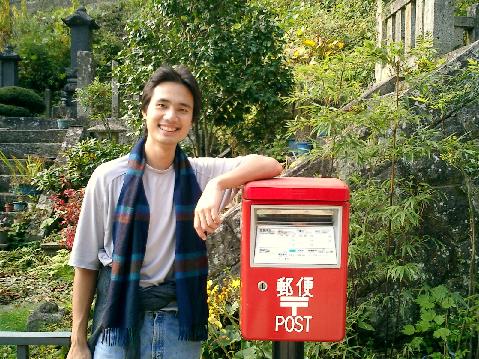 I came back to the same post box this month to find this.
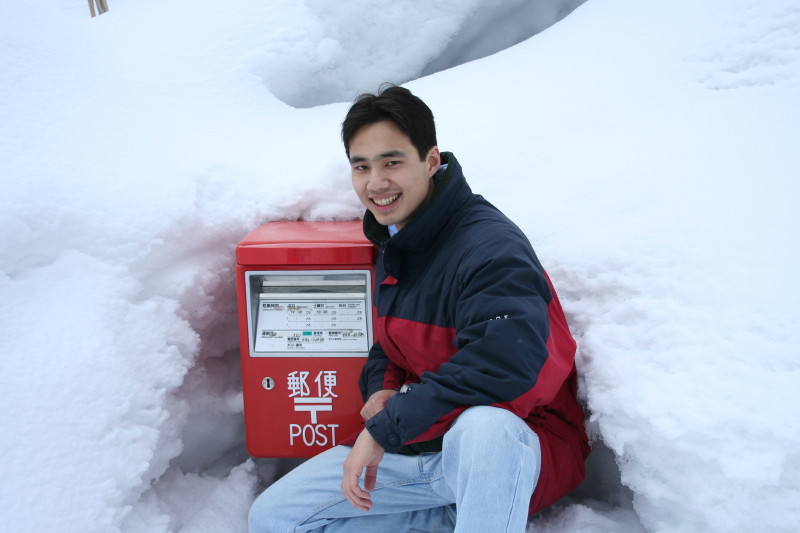 See the difference?
It's really funny, all Japanese people I talk make the suggestion that I'm really used to the cold, that it snows like crazy where I come from. Sometimes, I'd tell them that all Canadians live in Igloos and we go by dog sled everywhere. Well, no I don't, but the thoughts have crossed my mind.
We climbed to the top of Yamadera to be greeted with scenery in white.
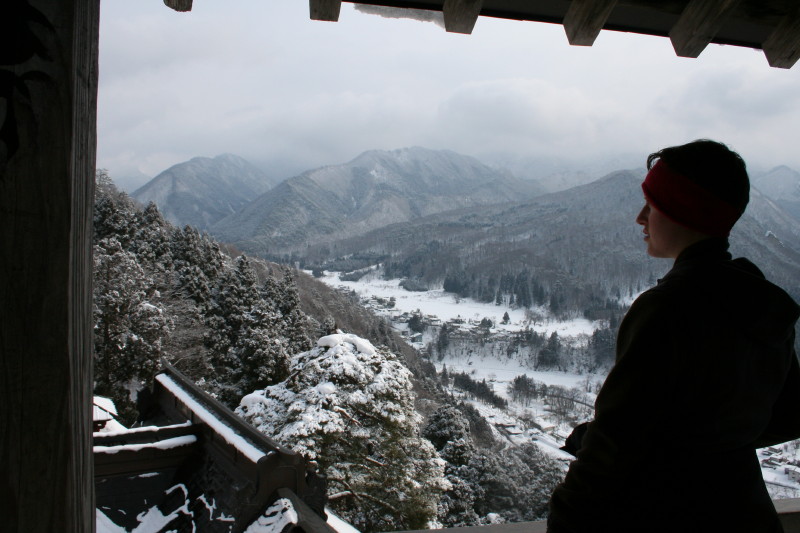 To the right, that's Mona. In the background, that's the view from the top of the mountain. It was breath taking to be there again in the winter. The next picture below is a shot of the icicles we caught on the way up the mountain.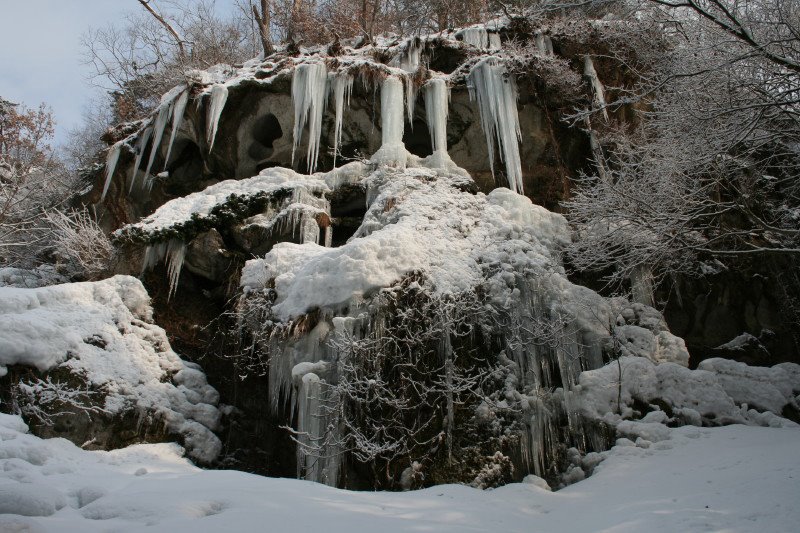
After climbing down the mountain. We caught lunch at the local restaurant that specializes in hand-made soba. I had duck soba that evening.
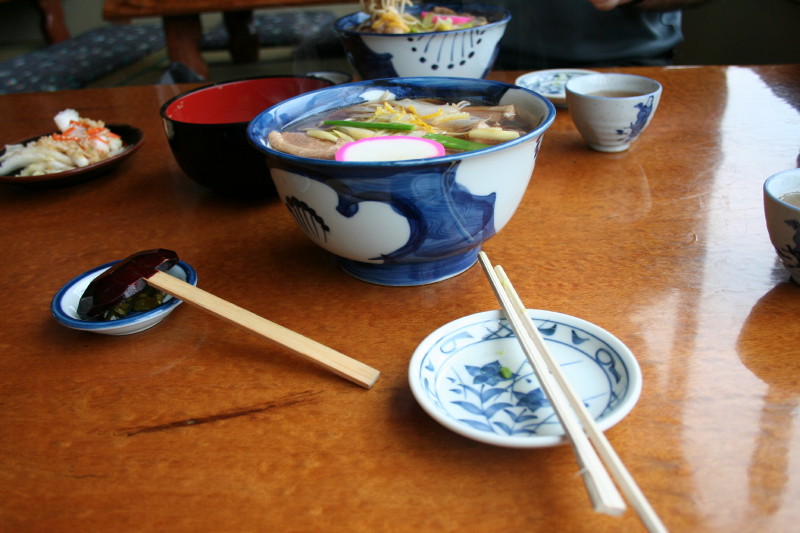 After about a 2~3 hour drive further North-West through a mountain pass, we were greeted with snow banks that were...taller than me! Incredible.
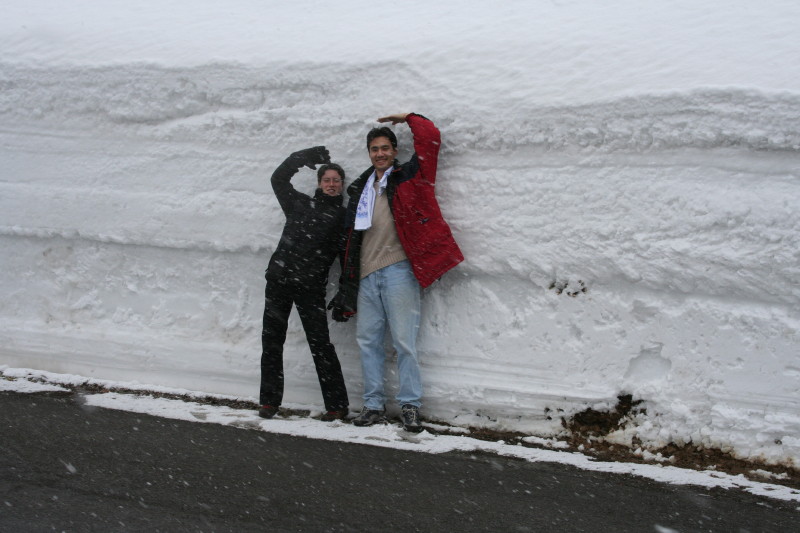 I will a more indepth review of our trip later on (so I hope). I took about 100 pictures during trip. I'll need to sort them get them together and post them as an album when I get some spare time. Enjoy the previews... and also people that live in the country side rock.
Happy Valentine's day everyone.
Wednesday, February 08, 2006
On Writing
Note to audience: I am currently tipsy --> finished off about 400ml of a bottle of wine after writing a material science report.
For the past 4 days, I have been working on preparing a report for one of my classes which is a study of fracture mechanics from the perspective of grain boundary engineering of bulk materials. What this means is that all sorts of materials are made of little itty-bitty crystals mashed together to form a big chunk of material. Metals and ceramics fall in to this category. Stuff like wood, might not and that knowing how these crystals mesh together can determing how strong a material is.
I have been attending classes for the last 3 months in Japanese and I did not grasp much of the course unless I was drawing from a pool of previously learned knowledge from my material science course back at UBC. It was not until I started pouring over a review paper provided by my professor, which I had to write a report on as my final exam, that I would finally understand the fragments and the bits and pieces of information that I would learn over the year would crystallize in my mind (excuse the pun).
It took 2 days of pouring over a 9 page document (while falling asleep several times) then dashing over vast knowledge-scape of the internet over another day that I would finally understand the paper. After that I would spend 2 days putting my thoughts together in order to produce a 1,500 word essay on how manipulating how crystals meshed together would improve the strength of bulk material (ie a chunk of material made up of itty-bitty crystals). I asked the professor for some slack to allow me to write this report in English as I do not have the grasp of the Japanese language to write a Japanese technical document.
What I did learn over the week of preparing for this report was that it becomes infinitely easier to write about a topic that you grasp and have a point to make of it. Without understanding and a point to write about, making a report or writing an essay of any sort is *impossible.* It took days to finally understand what was going on and it took atleast a day of some random writing to realize what points I wanted to make (I did a very bad thing, in that I didn't write an outline of the points of what I wanted to say at first to save me the trouble... as I usually do, for formal situations).
There is a reason I am writing about this. I remember a time when I was in middle school (when those existed in BC before turning into a grade 8~12 high school system) that I hated writing, like most other students out there. Writing was a chore-- it took a considerable amount of time to write a short essay on something trivial (ie. something I didn't think important) and then get a sucky grade on it. There were some years where my essays would be hits and I'd get a good mark in history and/or English, but there where other times where they would be misses. I even had an English teacher come up to me and ask me why my marks in Grade 12 dropped compared to grade 11... I had to write the damn English proficiency exam at the end of the year (I forgot the name) to get into an English course for my first year at university. As an aside, I got my butt whooped on the grammatical section but scored the mark in the essay section to have all other sections of the exam waived and have me eligible for the first year English course (Engl 112, as I remember exactly).
Back then in High School and some parts of university life, I hated writing (much like everyone else at the time). Writing, is immensely hard and different compared to speaking, because when it comes to writing, you as the author become vulnerable to your readers. Unlike speaking, your words do not transiently disappear into the abyss, nor can you support your arguments to understanding people with statements like "well... you know," or "you get the idea." It is different because what you say persists and you say is open to close scrutiny to other people. No more are semi-vague statements acceptable, nor are fallous or frivolous statements welcomed. Everything that you need to say, needs to be thought out and organized in ordered for you to make a point. Writing is a very naked and revealing act.
I have a profound respect for good writers. Most ideas begin with a feeling, a sort of hunch or a twitch of the mind. But for many people, these sensations remain as feelings that something clear yet fuzzy and thoughts are often left in that state. Many people become afraid of writing because they are afraid of "looking silly" or some sort of argument like that. At first is kind of embarrassing, but like a baby learning to speak, mistakes are necessary and it takes practice to get better.
There are more profound benefits than to just being a good writer, in that I mean a person that is able to put thoughts into words in an understandable manner. It is also the ability to be articulate or detailed about one's own discussions, for we all know that the devils are always in the details. To be able to write well, it take s a good understanding of what one wants to say, then to find the right words to say it. It doesn't end there, but it also requires good organization to present ideas in understandable ways-- not only must you understand how you might understand something, you must also understand how others think to present things in an understandable manner.
To have some sense of writing, it becomes important to know what you want to say. To know what you want to say, you must understand it and the basis of knowledge that you draw from. Without this start, it becomes a perilous journey to produce any sort of coherent writing. From the students I have taught, some of them believed that if they randomly started putting ideas together that an essay would appear in front of them. I used to be one of those people, I paid for it dearly from time to time when I wrote essays that were a hodge-podge of roaming points (my high school writing philosophy was to write some random body first, then make an introduction and conclusion to fit whatever I patched together :P). Sometimes it would be a hit and others would be a miss, but I always wrote best when I was pissed-- because when I was pissed, I always knew exactly why.
All of my meandering tangents aside, being able to explain things clearly, especially in writing, is telling of how well a person is able to think and understand information. Being able to explain something with ease is in reality, much harder than it looks (and most often, underestimated). For that, people that can explain complicated topics with depth and simplicity are well respected... and that person could be you.
Sunday, February 05, 2006
Resolution
Random note: This is my 103rd blog post since coming to Japan.
It's been a weeks since my last presentation to the lab about trying to make improvements and getting shot down by the German guy. His name is Jan and actually he isn't such a bad guy., he just needs work on finding less aggressive ways of giving constructive criticism instead of bringing down the hammer on someone that he doesn't think is on the ball (he sort of has a habit of this when questioning others in our lab meetings during their presentations).
Since that last week, we still have been going for lunch and dinner as part of our group, still talking and he invited me out with a Japanese friend from a company for dinner. There is no animosity because in general, I do believe him to be a fairly nice guy. I was just incredibly pissed after getting hammered by him.
On a Thursday night while working in the electronics building of the lab I decided to ask him what was up with him with those questions of his. Apparently, some lines of communication were crossed and we weren't interpreting each other quite properly. I was giving the presentation in Japanese that day (not exactly that good at making detailed discussion but I was trying) and it seems that Jan didn't entirely understand me (this is my second language, for him it's his third). After a few questions, he thought I was dodging his questions... he was asking me about one thing (which I didn't think was relevant.. and hence trying to steer the questions in another direction to show things in a different perspective) while I was trying to move the conversation in another. As a result, he thought I was dodging and has an instinctual reflex to hold someone's feet to the fire and kept hammering on one point resulting in gridlock. I used to be something like that, but have changed since.
To give an illustration it works like this (some of the Japanese presenters are horrible for this):
1. Presenter gets asked question from Jan: "have you considered what happens when you do blah-blah to your sample?"
2. Presenter says: "no, it isn't an issue."
3. Jan asks a leading question: "So tell me what happens to (property) blah-blah to your sample when you do something-or-other?"
4. Loooong pause --> the presenter has been caught and embarrassed and is looking for a way out or for the question to blow over.
Sadly this is very typical at our lab with Japanese presenters. It is my opinion that they are very shy of admitting mistakes (they have a tendency of being embarrassed) so instead they try to pretend there isn't one and keep moving on. It's been happening since I've started attending these meetings. I don't believe that people should be embarrassed when admitting mistakes or limitations in knowledge, it's a fact that we don't know everything... just wish that people are more comfortable with understanding the limitations of their own knowledge.
Now that we've got some dialogue going, we have both come to an understanding that this lab does need improving. Communication wise, better understanding of why we hold some of these meetings... I have a great example when one very annoyed undergrad student complained about why we had to attend weekend meetings.
I was told the same story he explained, that these meetings are to help improve people's presentation abilities for conference proceedings and questioned why is it necessary for us to attend. The prof immediately quipped back that attendance is optional and that these presentation meetings aren't for conference practice, it's to present your research in more detail to the professors so they can keep track of the students.
It's communication problems like these that are major problems. If people don't get what is going on and why things are being done then how does one know that objectives are being achieved? It's incredible sometimes that things aren't explained properly. Is this a problem of a big lab? I'm not sure but it's a problem.
It's problem like these that sort of bother me; it's like people aren't communicating or thinking. Jan told me that when he was here close to 5 years ago, that the students at the lab were much smarter, people were much more involved. He was telling me about all the fundamental knowledge that these people don't know, that and they assume that it isn't a problem. Knowledge isn't passed around and it seems that people are inherently ignorant.
This is a little bigger problem than I initially thought (ie more problems) and after thinking about all of this, I don't see the "big picture" of what is affecting what. Jan and I have agreed to find time to sit down with some of the students to figure out more on how this lab works and what are the problems and how to solve them.
Of an interesting note, some of these problems are cultural (if I can go as far as to call them that). Poor communication with superiors is often a result of students sometimes being afraid of questioning their professors (ie respect of authority). If the problems we are trying to solve end up requiring cultural changes, things might get even more... "interesting".
Thursday, February 02, 2006
A Short Blurb on Ideas
I was just reading on Slashdot today and found this article about some people at UC-Berkley doing research on the connetions between language and thought. Whcih is something I wrote about 5~6 months earlier. It seems that this idea was thought of over 70 years ago 1930, otherwise known as the Saphir-Wharf Hypothesis (SHF).
It's just kind of amazing to realize that random people in different parts of the world and eras comming up with similar ideas.
It's just kind of amazing to realize that random people in different parts of the world and eras comming up with similar ideas.
Tuesday, January 31, 2006
New Year's Resolutions
I said that I would post about this, but haven't gotten around to it for a little bit, things keep comming up... but that, unfortunately, is an excuse.
I have reviewed my old new year's resolutions from last year... I've ripped the post and inserted below in grey below this post. I am glad to say that I have achieved the main objective of last year-- to get a good organizer.
I have an organizer for the computer that I swear by now. It's called Rainlendar and I've been using since October (and it's free too). It displays a 1 month calendar and shows what you have planned for the next 7 days, in addition to keeping a todo list on the side. As a result, I am able to quickly look ahead to see what is comming up, or look back to see what I have done. It can also run off a server (you can save your schedule on a different computer and access your lists from that computer).
As for my resolutions this year, I will list them below:
It has come to my attention that I believe that complain too much (or have a tendency to be a little unsatisfied about many things). As of comming to Japan, I was first impressed by many things... unfortunately I haven't been quite disappointed by other things (and I deal with it on a continuing basis). I have reviwed some of my older posts and realized that I often dwell on many things that I find ineffective, gripe about why it is ineffective and then get a little disheartened at why things cannot be improved. This is not a very productive outlook and dangerous water to tread.
As a teacher at heart, it is my natural inclination to help others and share information. The problem is that I have become more and more indiscriminate in trying to improve things that others don't believe to be a problem and hence good intentions might be running into conflict with others or culture in general. In conclusion, I should not feel so responsible for the effectiveness of everyone or everything else. What is important is that I focus more on myself. If what I do works, then it'll show. If they want to learn it, then I'll be happy to teach. The emphasis is on the doing.
On personal duedates:
I had an interesting realization a few weeks ago when I was preparing for my seminar on Lapace transforms and frequency filters. I was deadset on trying to do so something completely different from the standard seminars done here-- I wanted a working demonstration of the presented theory in action. I had 3 days to get it working starting from a Wedensday to get it ready for a Saturday presentation.
When there is a will, there is a way. Without thinking, a 3 day plan was hashed out. I had planned to get the theory presentation down on Wedensday and Thursday afternoon. Thursday evening and Friday was for circuit construction. It was fortunate that I started early on the circuit because it turns out that the lab was short some parts which I had to buy. I would have never made it if I just decided to start on the Friday.
After that event, I realized that a drive to want to do something and setting a duedate to get something done is crucial to get things to materialize, else it's only good as a dream. Now the next trick is learning how to deal with planning a discovery based project, har har.
On personal time:
People here work long hours, it seems like they have never ending responsibilites or things to do. They work long hours and have no time to themselves. I ask them sometimes, what other interests do they have... unfortuately I haven't heard many answers. As for me, I'm starting to forget what my other interests were as more and more time is being gobbled up by lab.
To me, it's just healthy to make time to do other things. Things like reading, practicing writing (espcially in Japanese), exercising and pursuing other personal goals. It's not about getting a life, it's about keeping a diversified life.
Anyways, it feels like I've been aimlessly babbling so I'll end it here for now!
Last years Resolution post (from old blog):
I have reviewed my old new year's resolutions from last year... I've ripped the post and inserted below in grey below this post. I am glad to say that I have achieved the main objective of last year-- to get a good organizer.
I have an organizer for the computer that I swear by now. It's called Rainlendar and I've been using since October (and it's free too). It displays a 1 month calendar and shows what you have planned for the next 7 days, in addition to keeping a todo list on the side. As a result, I am able to quickly look ahead to see what is comming up, or look back to see what I have done. It can also run off a server (you can save your schedule on a different computer and access your lists from that computer).
As for my resolutions this year, I will list them below:
- Complain less, do more (take more self-responsibility)
- Set personal duedates for things that need to be done
- Alot 1~2 hours/day as personal time
It has come to my attention that I believe that complain too much (or have a tendency to be a little unsatisfied about many things). As of comming to Japan, I was first impressed by many things... unfortunately I haven't been quite disappointed by other things (and I deal with it on a continuing basis). I have reviwed some of my older posts and realized that I often dwell on many things that I find ineffective, gripe about why it is ineffective and then get a little disheartened at why things cannot be improved. This is not a very productive outlook and dangerous water to tread.
As a teacher at heart, it is my natural inclination to help others and share information. The problem is that I have become more and more indiscriminate in trying to improve things that others don't believe to be a problem and hence good intentions might be running into conflict with others or culture in general. In conclusion, I should not feel so responsible for the effectiveness of everyone or everything else. What is important is that I focus more on myself. If what I do works, then it'll show. If they want to learn it, then I'll be happy to teach. The emphasis is on the doing.
On personal duedates:
I had an interesting realization a few weeks ago when I was preparing for my seminar on Lapace transforms and frequency filters. I was deadset on trying to do so something completely different from the standard seminars done here-- I wanted a working demonstration of the presented theory in action. I had 3 days to get it working starting from a Wedensday to get it ready for a Saturday presentation.
When there is a will, there is a way. Without thinking, a 3 day plan was hashed out. I had planned to get the theory presentation down on Wedensday and Thursday afternoon. Thursday evening and Friday was for circuit construction. It was fortunate that I started early on the circuit because it turns out that the lab was short some parts which I had to buy. I would have never made it if I just decided to start on the Friday.
After that event, I realized that a drive to want to do something and setting a duedate to get something done is crucial to get things to materialize, else it's only good as a dream. Now the next trick is learning how to deal with planning a discovery based project, har har.
On personal time:
People here work long hours, it seems like they have never ending responsibilites or things to do. They work long hours and have no time to themselves. I ask them sometimes, what other interests do they have... unfortuately I haven't heard many answers. As for me, I'm starting to forget what my other interests were as more and more time is being gobbled up by lab.
To me, it's just healthy to make time to do other things. Things like reading, practicing writing (espcially in Japanese), exercising and pursuing other personal goals. It's not about getting a life, it's about keeping a diversified life.
Anyways, it feels like I've been aimlessly babbling so I'll end it here for now!
Last years Resolution post (from old blog):
New Years is a time of a new start and it is important to start off correctly. There is a lot I need to do and tradionally I'm pretty damn disorganized. So effective immediately, I am going to try and become more organized. If you want to know how bad I am, I bought a calendar in June and hung it on my wall-- the month is still sitting at August (I am sometimes hopeless when it comes to organization).
I am seriously looking for a computer based day/project planner. Recommendations are definately welcome. Something that can keep track of current/pending projects, task
management and a progress tracker would be awesome. Anything that can keep track of time frames of a month to half a year would be great. I have poked around a little but my hunt continues for the perfect planner... if worse come to worse, I'll consider programming my own :)
I took a look back at my 2004 New Years resolution and sadly the important resolutions were not entirely realized this year. A quick recap (copy paste from archive...):
Resolution #1: Remember to write 2004 from now on.
Resolution #2: Start executing projects off my todo list that I've been putting on hold for so long (some of my project ideas are several years old!)
Resolution #3: Organize and Prioritize! Fatal character flaw is that I always bite off more than I can chew. Gotta get a better way of keeping track of everything I'm up to else I'm going to over commit my resources and fry.
Saturday, January 28, 2006
Read the Fucking Manual!?
I had to think twice before deciding what I should write down for the title of this entry. I've had several reactions from a single event today, kind of hard to discuss both reactions simultaneously so I've decided to focus on one reaction at the moment-- that is my semi pissed reaction.
I spent yesterday afternoon talking to the research associate on finding a way to better encourage information and skill exchange at the lab. Microelectric Electric Machines (MEMs) is a tough subject, especially when it comes to fabrication (design and testing are hard too, but I am going focus on fabrication). If you're wondering what MEMs is, it's about making really small things, like a miniature motor that is about the size of a millimeter, sensors smaller than a strand of hair, even measurement devices that can weigh the mass of a single atom. To make these sensors, we use a variety of chemicals and masks (think cookie cutters) to carve chunks of silicon into useful devices. The process is very sensitive and not well controlled and hence, it is easy to screw up!
In theory, theory and practice are the same thing; in practice, they are different. I can attend seminars learning about how processes work and what is available. There is a BIG difference between actually doing these things. I need that knowledge to useful work!
Sure the manuals exist, they tell you the basics, but you're going to screw up these processes and also you're not going to be able to do them in the most optimal manner at first. People with practice will know the details on how things work... like how not to contaminate your sample, know why certain materials cannot be used together; things that manuals cannot possibly cover in proper detail in one sitting, either that or it becomes a monstrosity where people can't filter out quickly the useful bits. Asking questions is useful because people filter out the useful bits quickly; they can show you how something works and even mention benign details that one might not think to cover in a manual.
More importantly, there are loads of equipment at the lab. More than 50 machines, a variety of processes on how to make things and software that people use to design stuff. A lot of skill is required. I know for a fact that many people are having the same problems as I, that problem being how do you learn to use these processes/equipment and how do you learn to do them well in a timely manner?
I have a problem that I faced recently. There is an electron beam system used to make patterns. I am told that the average person can get patterns as small as 200 nm, a good user can get it down to 100 nm, then it was recently published by a user of that system that he got resolution down to 50 nm! I then asked the obvious question, "How do I learn how to make patterns at the 50 nm level?" The response I got was troubling... "well you first read the manual, get someone to teach you the basics then you try out different conditions until you can get 50 nm resolution." I asked, "how long does that take?" The response, "Well that can probably take 3 days." What the hell?!
This is a problem, that there is knowledge that isn't passed around. There has got to be a better way of learning. So I spent the better part of a Friday afternoon talking with the research associate and a friend of mine on how to get people to exchange this information. There are 50 people in this lab, there is lots of knowledge floating around how do we find a way to exchange this knowledge? This problem is being worked on-- since this summer, a seminar series on how to teach people the basics of MEMs processing. The problem is that it's just a seminar, it's all theory... there isn't anything practical in it. I thought about changing that.
I thought that finding a way to setup a practical seminar would be a great idea. Setup a short lecture on the basics of a process or machine, then go in afterwards and have the person show everyone how it works, what to watch out for and what to expect. I felt, that would be way more instructional.
I came to this conclusion 3 weeks ago, after I gave a seminar to my research group, a group of 15 people out of the 50. It was on Laplace transforms and it's applications to analog filters. The math isn't so bad, but it takes a good presentation and summery to truly understand it. I even made a stereo equalizer system and plugged music through it and showed them how the theory was applied. I even answered some in depth questions (which is rare because people don't usually ask questions) and even showed some interesting points they should watch out for electronic circuits (ie bad circuit wiring...). The response was very positive-- I ended my seminar with applause from my peers, which is rare for seminars (most people zone out because seminars are usually very BORING). So I thought, "ah ha!" this is it, this is how we can learn better!
There is this German guy in the lab, very bright, fairly well respected, into his second year of his Ph.D. He made a presentation to the professors and his research group a month back talking about the problems of education, why this lab could be better than it is currently is. I sat in because the meeting occurred in an open space right behind my desk. I took his comments to heart, because that was exactly how I felt about certain things in this education system. So I was feeling good about preparing this extra presentation, that it might gain some support. But alas, it wasn't the hit that I wanted it to be.
I presented this morning. I had all of 4 slides. Make a short announcement, say 10~15 minutes get some feedback and it'd be over. It dragged on for an hour. It dragged on because the German guy was too busy trying to shoot me down and kept trying to put me on the defensive. "Well why don't you read the manual about [such and such]" he'd say. I'd tell him, "there are things that the manual does not cover." He'd tell me "don't you ask people for advice?" I'd ask him back "I do, but how do you ask questions about things that you don't even know about?" To me, these are not constructive questions-- this was an attack, ridicule, insult, whatever. People that attack in this manner do not earn my respect. I found this behavior to be... offensive (literally).
He even attempted to ridicule me by saying out loud how I arranged a meeting with him but delayed it for 30 minutes at the last minute. What? Are you trying to paint me as irresponsible? I delayed it because some people were going to teach someone how to use a machine and I even told him about it and he said OK. I was not willing to turn this conversation into a squabble over this, this comment was irrelevant but I knew it had other implications.
I got some support from the professors, not full support but some positive feedback. They also told me that it was my responsibility to learn some of these things on my own. That's fine, but it costs time to learn mistakes that others have made, I prefer to avoid that-- they're missing the point. There was no resolution by the end. The profs talked about writing some of the manuals in English, okay... I can mostly read the Japanese ones but they missed the point.
I told the German guy directly to set the record straight that I postponed our meeting by 30 mins because I wanted to go off and learn how to use one of the other machines. He told me "yeah I know." Good grief. "Yeah, Fuck you" I wanted to say.
One of the professors that didn't entirely support my idea had a seminar that day on filters and their group was like a boat with no paddle trying to go upstream-- no one knew what was going on. The professor didn't have a clue either... and he's a grad from the all-oh-so-famous University of Tokyo. The only reason why I was in on the presentation was because they do their seminar right behind where I sit. So I do the good Samaritan thing and help out and clarify the problem they had and show them some of the basics.
I decide to drive my point home by telling him and his group that I'd be willing to give them a practical seminar on filters and the theory behind it next week. He tells me, "I want to figure all of this out now." I shrugged and asked, "what else seems to be the problem?" He told me "Give me a bit, let me figure out the question." Seriously, that is what he said. I shrugged and gave him time... then at the end he tells his group "alright, could someone present how this equation works next week?" An American friend in the group, (can't speak much Japanese) says "sure, I can... could've solved this an hour ago but I didn't know what was going on," (for his masters thesis, he studied all of this stuff backwards and forwards.... see what I'm getting at?) I was shaking my head internally.
Hours later, I went for a dinner with some students studying English in my class that invited me over to their house. Feeling much better and now, I am here contemplating whether I should confront the German guy to figure out what was all that about. First he discuses this problem to the professors publicly about an education/skill problem... then shoots me down later for proposing a solution? Is this selfish ambition? Is it worth getting to the bottom of this and dealing with the implications of his actions? What is the aftermath? It is still worth getting to the bottom of it? Damn it, I'm curious.
Honestly speaking, if that was an attack on me and I have him figured, then he should be shot down for it. That kind of behavior should not be tolerated. The only problem is that he's considered the smartest guy in the lab. Dealing with equals isn't a problem, dealing with slight superiors isn't an issue either. But when you've got a guy that's leaps and bounds ahead in knowledge and skill while I don't even have 1/3 of that knowledge... while I might feel that I am holding the high cards, it just doesn't seem wise to play them.
Politics... bah. Things like this just gets in the way. I might not like it, but that's life-- deal with it. Well I am glad that I wrote this out. I have a better idea of what I should do now (did I mention that writing essays is a way to figure things out?)
I'm not going to bother confronting the German guy-- it isn't worth the fallout or the price of knowing. I'm going to have to learn the hard way. If I have a way to change things, do it bottom up (ie find a way that does not require the support of administration and the lab to support). If it works, then it'll catch on. Maybe, one day when I am further up the ladder, a top down approach might work.
So tell me what would you people do?
(2,000 words in 2 hours, I write most when annoyed!)
Wednesday, January 25, 2006
Rituals, Customs, Whatever
It's been an interesting week, which I have spent working on getting a mass flow controller hooked up to a vacuum chamber so I can get back into growing carbon nanotubes for a project that I haven't mentioned yet... but I'll do that another time.
The more important part, is that I've recently been talking to some people about how uncomfortable I've been in Japan when people are being just too polite.. it's something that is customary under certain circumstances, like when some certain middle aged or elder people treat guests or how some people deal with human interaction in general.
I was over at a friend's house last weekend for something interesting. I had the chance to listen to a Kabuki teacher and student do a short lesson/performance at a friend's place and dropped by. The family is obviously well off, the father is a doctor. I dropped in just after the lesson started (I wasn't late... my friend, Sachie, slept in while I was supposed to meet her in front of some 7-11 store). The mother was polite, excessively. She'd be on her knees bowing to the Kabuki sensei and stuff, I was cool with that, I've never been in that kind of situation before and thought that person was a really special person so I joined in with the on-the-knees-bowing mumbo-jumbo.
The teacher was real friendly, he showed me his music books and lent me one so I could follow along with the song. It's really old fashioned Japanese music, not something that I'd listen to (it's rather monotonic) but I'm all for new experiences. At the end of the lesson, after the teachers packed up and went. I stuck around for dinner, however it felt kind of odd; in the sense that Sachie and her mom was off in the kitchen fixing dinner while I hung out in the living room. I dropped into the kitchen looking for something to help with but there wasn't much for me to do.
Sachie brought out the food for me in very Japanese style (on the knees type) while I just kind of sat there because there wasn't much for me to do. I was feeling rather awkward about the thing; it just seemed strange to have a friend sort of waiting on me in their own home, I'd rather join in and help out.
There are many instances in Japan where people act all polite. It's sort of customary, since you can tell after a while where you notice people act in a similar way in certain circumstances. If you're a stranger in an office and someone bumps into you, they say something like "excuse me" using words that are exceptionally polite. They whip it off really fast too, like it's programmed into them.
For the young generation, those below their thirties this isn't a problem. But the formal part of Japanese life starts to take control once people start getting into their middle ages. The problem is that life starts to become more and more scripted when you just start to follow customs. Japan isn't unique in this respect. Think of the Feudal age in Europe with Lords, Knights, religious figures and more. It would be a (literal) disgrace to not follow custom when dealing with nobility. The only difference between modern Japan and the European Feudal age pretty much everyone is treated with the same sort of customary "grace." This is unfortunate because individual personality somewhat diminishes.
I met an American a while back in a semi-conductor tradeshow and he told me something that stuck in my mind ever since I heard it. His words were along the lines of "I might not be able to speak for all Japanese, but most of them are exceptionally polite, but they aren't entirely friendly." In a sense, this is a very good interpretation as to my opinions of the Japanese people. When you do get to know people intimately, however, they do become very friendly... but I'm going off on a tangent here.
The problem about being customary is that it doesn't necessarily have to represent the real feelings of a person. Watch some TV in Japan, there's probably some corporate problems going on, for example like a corporation not meeting profit expectations of the shareholders. The CEO resigns and the entire board comes out on TV makes a public apology then makes a solemn bow. A Japanese friend of mine I was talking to was telling me that most of it is an act.
That comment had an impact on me-- how do you determine the real feelings of a person? The solution to this problem is simple, you just watch what that person does.
A person is not reflected by the things they have to do but by the things they choose to do.
I believe this is true for understanding people in general, not just for looking at the Japanese. It is also true for finding love.
Tuesday, January 17, 2006
Getting Work in Japan
Getting a job in Japan is really quite different compared to getting a job say in Canada or in North Amerca in General. My experiences in Canada were that you would go and hunt for one on your own, looking through job websites and companies that have posted online that they are looking for people. Then you'd just fire them over a copy of your resume and a cover letter telling them why you are interested in working for them.
In Japan it is kind of different. They way things work in this country is that people go to University (maybe they might study), then about a year before graduating they attend job fairs in Japan to check out prospective companies and then use a matching system that is a part of the University to land them selves a job. Almost all students from a University get placed using this method. The one significant down side is that they have no job finiding skills.
The interesting thing that sparked all of this was a conversation I had with a friend of mine in one of my classes. He asked me if I was planning to get a job (he is also a masters student) because this was the time of the year to start looking and getting prepared (all of this is done in a year in advance! I think it's way to fast btw), so I told him that I haven't decided yet. I am still doing some thinking on the matter. But I told him in the end that if I were to get a job in Japan that I'd probably get one and work here for a few years and then move on. He had a bit of a shocked reaction.
There is an image in Japan that when you get a job in a large company that you would work there for a really long time, pratically for life in many cases. Meaning that my perspective about jumping from company to company is, literally, quite foreign to them. The idea of company hopping or something like that has a bad image in Japan. From what I have heard, it means that for you to leave a company, there must have been something wrong with *you.* Do it too often and companies will be afraid of hiring you. Sure that is something I can agree with if put into excess, but what about working in a place for about 4~5 years and then moving on to a new company? That idea is also quite foreign to them but it is starting to gain some acceptance from what I've heard... how much, I really don't know.
In North America, I do know from what I have read, it is quite common for people to change jobs every 4~5 years, even total career changes during those times. I'm all for that since I'd get bored doing the same job for too long a period of time. Can you imagine, working at the same place for 40 years until you retire? I can't. But being able to find other jobs that you are capable of doing is very important from my point of view. I'd rather not be entirely dependent on a single company for my livelyhood because it's not safe. Who knows what the face of technolgy will look like in the next 40 years? Let alone in the last 20 where computers have revolutionalized the way we do things. Who knows, one day you might be out of a job... instead of panicing about it, I'd rather know how to catch other jobs and hop back onto my feet.
In Japan it is kind of different. They way things work in this country is that people go to University (maybe they might study), then about a year before graduating they attend job fairs in Japan to check out prospective companies and then use a matching system that is a part of the University to land them selves a job. Almost all students from a University get placed using this method. The one significant down side is that they have no job finiding skills.
The interesting thing that sparked all of this was a conversation I had with a friend of mine in one of my classes. He asked me if I was planning to get a job (he is also a masters student) because this was the time of the year to start looking and getting prepared (all of this is done in a year in advance! I think it's way to fast btw), so I told him that I haven't decided yet. I am still doing some thinking on the matter. But I told him in the end that if I were to get a job in Japan that I'd probably get one and work here for a few years and then move on. He had a bit of a shocked reaction.
There is an image in Japan that when you get a job in a large company that you would work there for a really long time, pratically for life in many cases. Meaning that my perspective about jumping from company to company is, literally, quite foreign to them. The idea of company hopping or something like that has a bad image in Japan. From what I have heard, it means that for you to leave a company, there must have been something wrong with *you.* Do it too often and companies will be afraid of hiring you. Sure that is something I can agree with if put into excess, but what about working in a place for about 4~5 years and then moving on to a new company? That idea is also quite foreign to them but it is starting to gain some acceptance from what I've heard... how much, I really don't know.
In North America, I do know from what I have read, it is quite common for people to change jobs every 4~5 years, even total career changes during those times. I'm all for that since I'd get bored doing the same job for too long a period of time. Can you imagine, working at the same place for 40 years until you retire? I can't. But being able to find other jobs that you are capable of doing is very important from my point of view. I'd rather not be entirely dependent on a single company for my livelyhood because it's not safe. Who knows what the face of technolgy will look like in the next 40 years? Let alone in the last 20 where computers have revolutionalized the way we do things. Who knows, one day you might be out of a job... instead of panicing about it, I'd rather know how to catch other jobs and hop back onto my feet.
Thursday, January 12, 2006
A Short Photo Update
There is a blessing to having a digital camera; its that it remembers dates for you of when you did what. I have a program that came with my Casio camera that makes a pretty nice album library of images organized by date. I may have to move to new general piece of sofware now that I've moved to another camera.
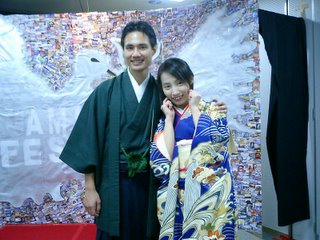 November 11th 2005: Volunteering at international fashion show. They were short on models and the news got sent to me that they were looking for some "models" (ha!). There wasn't much of a choice to make; YES! And that was that. The organizers had clothes from all over the world, lots from South East Asia from parts like Malaysia, Indonesia and such. The organizers told me that they needed a guy to wear a kimono and so that was that. The pretty girl to the right is from Taiwan. The kimono she's wearing is over $10,000! The belt alone (imbuned with gold and silver) was $5,000.
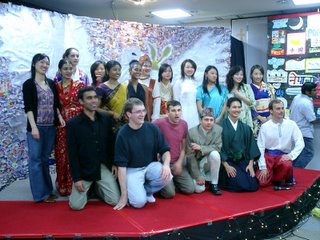 The next photo here is all the other volunteers that took part in the fashion show. The theme was to have everyone from different parts of the world to wear clothing from other parts of the world which came out to an interesting effect. I thought it was great. There is a wonderful plus to living like this in Japan. The international students are a microculture living inside a foreign culture. Most of these people came out for a reason, to learn about new cultures (Japan in particular)... we got way more than we bargained for.
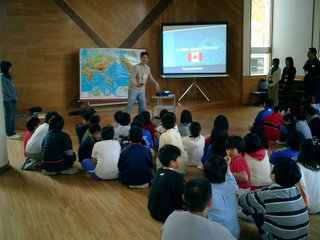 November 24th, 2005: Canada Presentation
A friend of a friend studying education at one of the local education colleges in Sendai that was looking for a foreigner to do a presentation to the students at the local elementary school. So yep, I decided to pitch in looking to see a little what Japanese schools and kids are like. I'll tell you this much-- they're really, really, really, really energetic. I would think even a little more than the kids back in Canada.
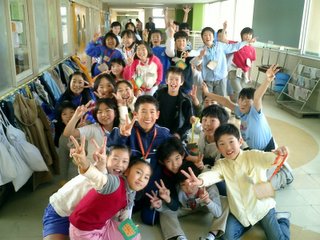 I tried taking a picture of the kids lining up getting ready for the teachers to lead them into the auditorium where I'd be making my presentation. I got one blurry snap, so I decided to try again. They noticed and before the my camera could finish writing the last picture into memory, the kids were in uproar to get themselves into the picture and this was the result. Cool eh?
There is one question that puzzles me a little. It's that children in Japan after getting older have a tendency to get way quiet. Get into an elevator with them and hardly anyone makes small talk.
December 19th 2005: Snow in Sendai.
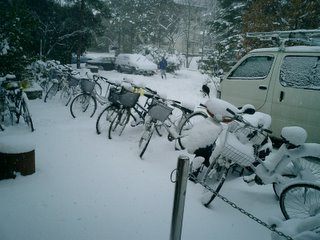 he North East parts of Japan is currently facing records amounts of snow being dumped all over the place. From ther people I've talked to, it got particularly cold this year. Over the span of 2 days, we had about 30 cm of snow dumped all over the place. I'm still riding my scooter through the snow and ice thanks to my spiked tires. It is still pretty damn slippery and I've seen people wipe out. The trick is to not go fast in snow and over ice and it's smooth riding (for the most part). The plus about having snow dumped down like this is that it a great tale-tale sign that ski conditions in the mountains will be great (and great they were! A story for another time).
December 24th, 2005: Chrismas Eve Dinner
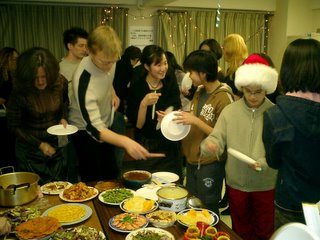 A Chrismas dinner held by the international students. The best part? Potluck! Chrismas music, gift exchange, good people and good food. There wasn't much more I could ask for. I got the invite a little late (it's hard to get word to me about events because I spend too much time at the lab.. and spend most of the time back at the dorm sleeping) so I didn't participate in the gift exchange. The food was great. I had samplings of Pakistani, German, Korean, Japanese, French and food from a bunch of other countries. Hmmm, serously we need to do some international cooking lessons!
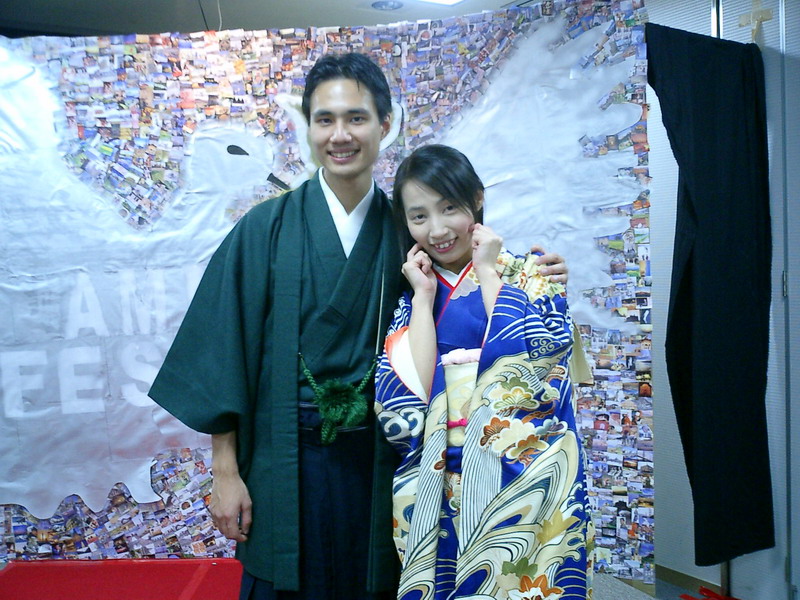 November 11th 2005: Volunteering at international fashion show. They were short on models and the news got sent to me that they were looking for some "models" (ha!). There wasn't much of a choice to make; YES! And that was that. The organizers had clothes from all over the world, lots from South East Asia from parts like Malaysia, Indonesia and such. The organizers told me that they needed a guy to wear a kimono and so that was that. The pretty girl to the right is from Taiwan. The kimono she's wearing is over $10,000! The belt alone (imbuned with gold and silver) was $5,000.
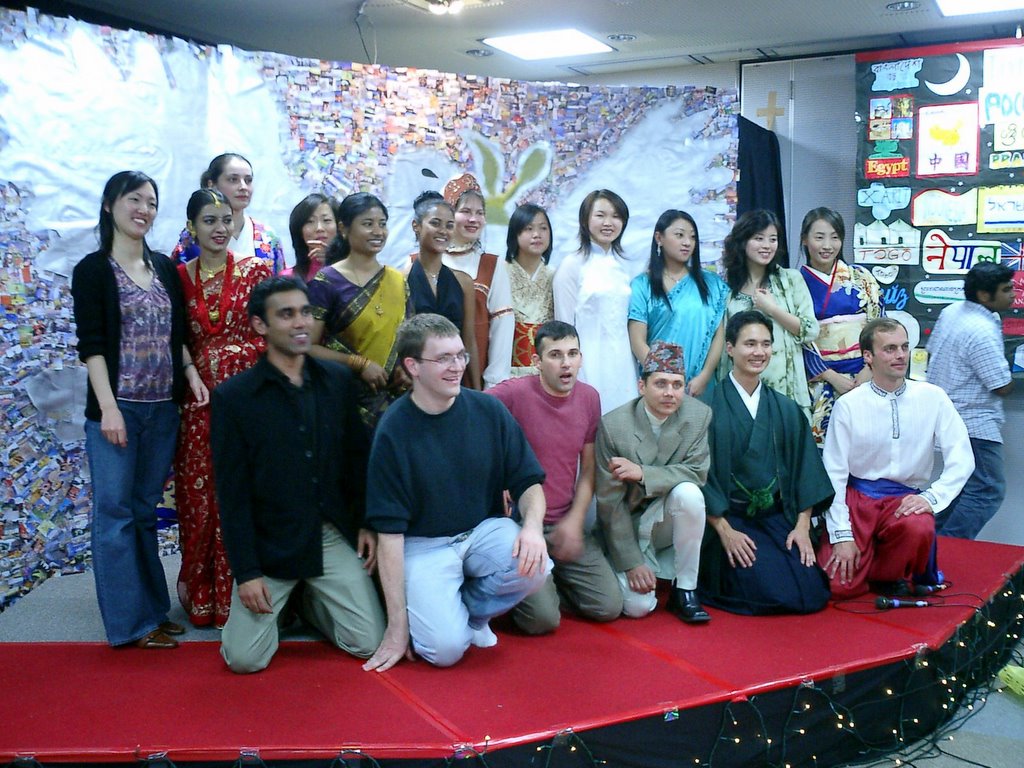 The next photo here is all the other volunteers that took part in the fashion show. The theme was to have everyone from different parts of the world to wear clothing from other parts of the world which came out to an interesting effect. I thought it was great. There is a wonderful plus to living like this in Japan. The international students are a microculture living inside a foreign culture. Most of these people came out for a reason, to learn about new cultures (Japan in particular)... we got way more than we bargained for.
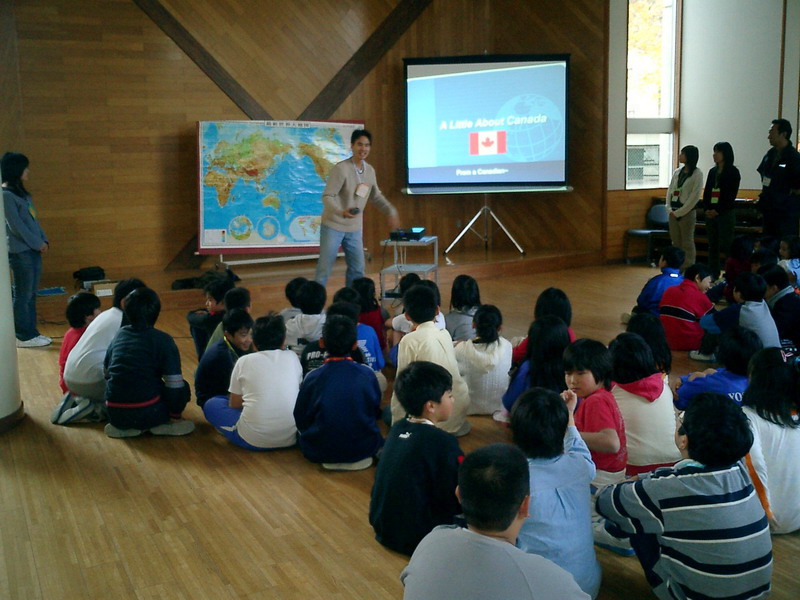 November 24th, 2005: Canada Presentation
A friend of a friend studying education at one of the local education colleges in Sendai that was looking for a foreigner to do a presentation to the students at the local elementary school. So yep, I decided to pitch in looking to see a little what Japanese schools and kids are like. I'll tell you this much-- they're really, really, really, really energetic. I would think even a little more than the kids back in Canada.
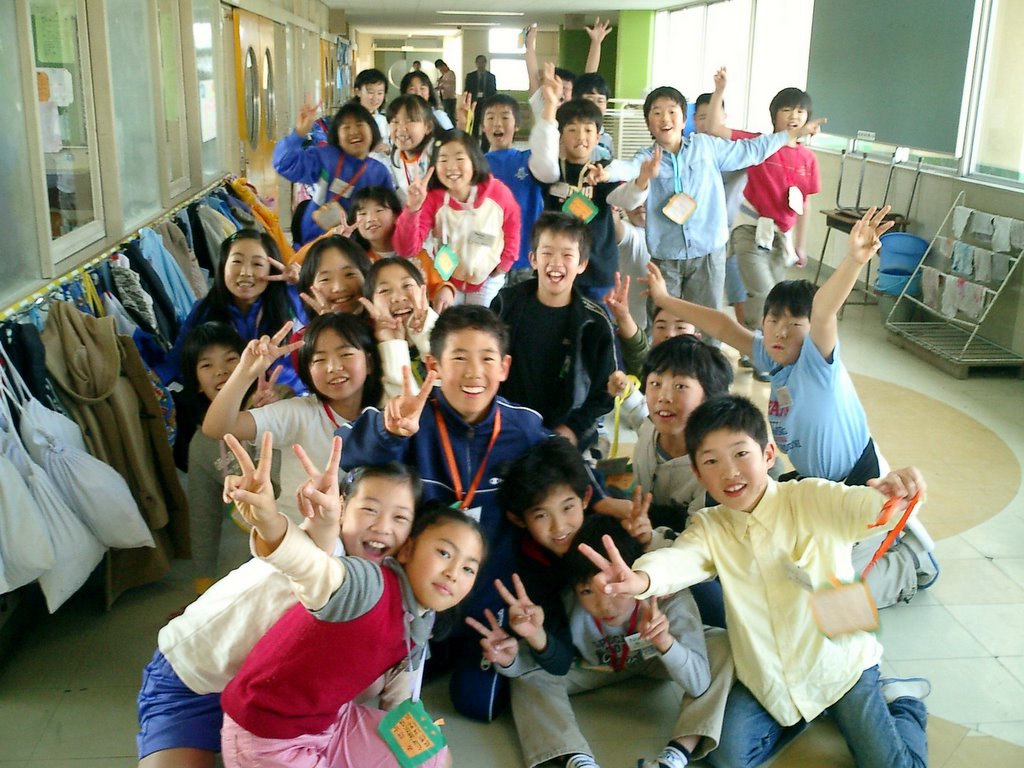 I tried taking a picture of the kids lining up getting ready for the teachers to lead them into the auditorium where I'd be making my presentation. I got one blurry snap, so I decided to try again. They noticed and before the my camera could finish writing the last picture into memory, the kids were in uproar to get themselves into the picture and this was the result. Cool eh?
There is one question that puzzles me a little. It's that children in Japan after getting older have a tendency to get way quiet. Get into an elevator with them and hardly anyone makes small talk.
December 19th 2005: Snow in Sendai.
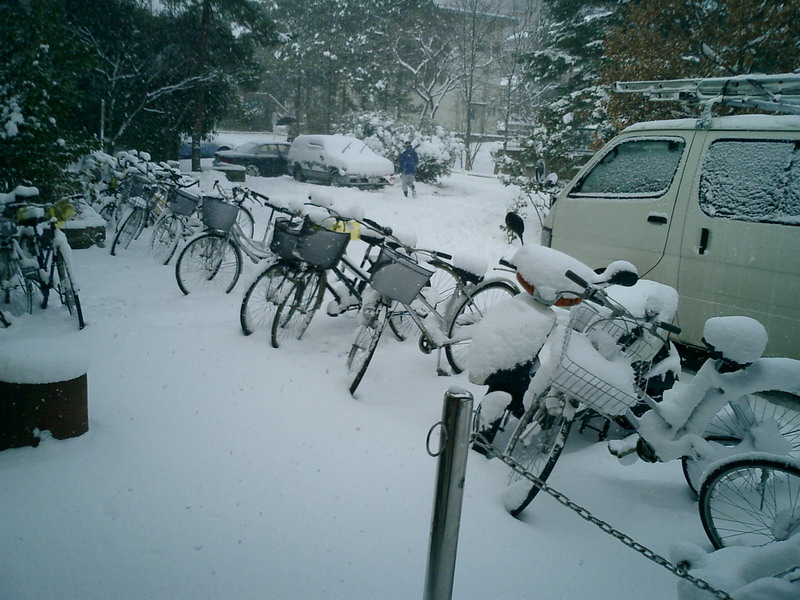 he North East parts of Japan is currently facing records amounts of snow being dumped all over the place. From ther people I've talked to, it got particularly cold this year. Over the span of 2 days, we had about 30 cm of snow dumped all over the place. I'm still riding my scooter through the snow and ice thanks to my spiked tires. It is still pretty damn slippery and I've seen people wipe out. The trick is to not go fast in snow and over ice and it's smooth riding (for the most part). The plus about having snow dumped down like this is that it a great tale-tale sign that ski conditions in the mountains will be great (and great they were! A story for another time).
December 24th, 2005: Chrismas Eve Dinner
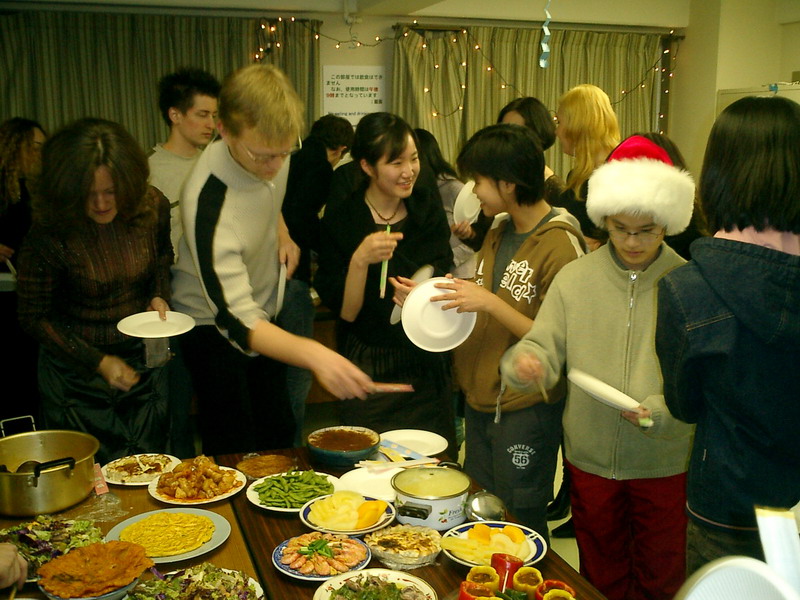 A Chrismas dinner held by the international students. The best part? Potluck! Chrismas music, gift exchange, good people and good food. There wasn't much more I could ask for. I got the invite a little late (it's hard to get word to me about events because I spend too much time at the lab.. and spend most of the time back at the dorm sleeping) so I didn't participate in the gift exchange. The food was great. I had samplings of Pakistani, German, Korean, Japanese, French and food from a bunch of other countries. Hmmm, serously we need to do some international cooking lessons!
Camera Investment
I've been in Japan for 6 month, been to Taiwan and already been on several adventures. If there was something I was lacking, it was a decent camera for me to properly document my travels. My old camera (yes, this means that I have a new one) is a Casio Exilim camera which it atleast 2.5 years old. It's 2 megapixels with no zoom meaning that I'm only good to take close up pictures or scenic shots. Getting extreme close ups and taking medium range photos with detail was an impossibility.
I had the fortune of seeing what a real good camera (with a really good lens) can do after my trip to Yamadera (Mountain temple) during the autumn leaves season of Sendai. That photo was taken about 2 stories below with a telescopic lens. The guy knew what he was doing. I was smitten.
2 months later, after the end of the big "first sale" event of Sendai, I had stopped by the Yodobashi camera store looking for a deal for a good new camera. By 9:00 am, when I arrived, they were sold out of their cheaper cameras, leaving me to look at the more expensive ones. After some more research, I decided on a Canon EOS 350D camera and ordered one from Tokyo. The purchase would set me back about $1,000. But I saved $200 instead of buying the camera from the local Yodobashi Camera retail outfit. That's the power of the internet folks. For those living in Japan, look up www.kakaku.com for what you are looking for. Quite often you can find things online for 15%~20% cheaper than paying full price.
My camera arrived yesterday and this is what it looks like.
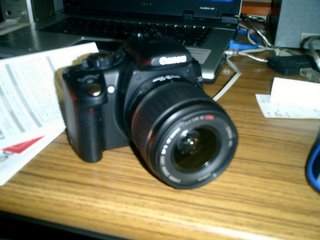
Here's a picture of my new camera (taken with my old camera :)
Here are some of the pictures I took today of my room:
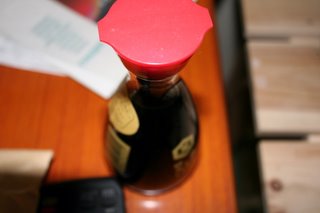
Soysauce close up

Bottle of red wine
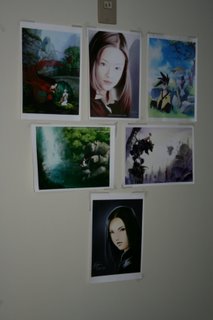
Posters on my wall
Initial reaction
My first reaction to this camera is a little overwhelment with all the features. It's not a bad thing. I'm usually good with technology, the only problem is that the instruction manual is all in Japanese. It's going to take a little time for me to sift through all the information... else I'll break down and find an English version somewhere. The camera comes with a set of preset shooting mores including: protrait, senic, sports, night, no flash and close up. There is also varying levels of manual modes where you can play with the arpeture sizes and shutter speeds/exposure times, white balance, color filtering and plenty more. I'm going to have to play the camera
The auto focus works pretty good with the camera being able to focus on a target in about half a second. I hope in the near future, I'll be able to post some great photos of life in and out of Sendai. Which reminds me... I have a back log of photos to post...
I had the fortune of seeing what a real good camera (with a really good lens) can do after my trip to Yamadera (Mountain temple) during the autumn leaves season of Sendai. That photo was taken about 2 stories below with a telescopic lens. The guy knew what he was doing. I was smitten.
2 months later, after the end of the big "first sale" event of Sendai, I had stopped by the Yodobashi camera store looking for a deal for a good new camera. By 9:00 am, when I arrived, they were sold out of their cheaper cameras, leaving me to look at the more expensive ones. After some more research, I decided on a Canon EOS 350D camera and ordered one from Tokyo. The purchase would set me back about $1,000. But I saved $200 instead of buying the camera from the local Yodobashi Camera retail outfit. That's the power of the internet folks. For those living in Japan, look up www.kakaku.com for what you are looking for. Quite often you can find things online for 15%~20% cheaper than paying full price.
My camera arrived yesterday and this is what it looks like.
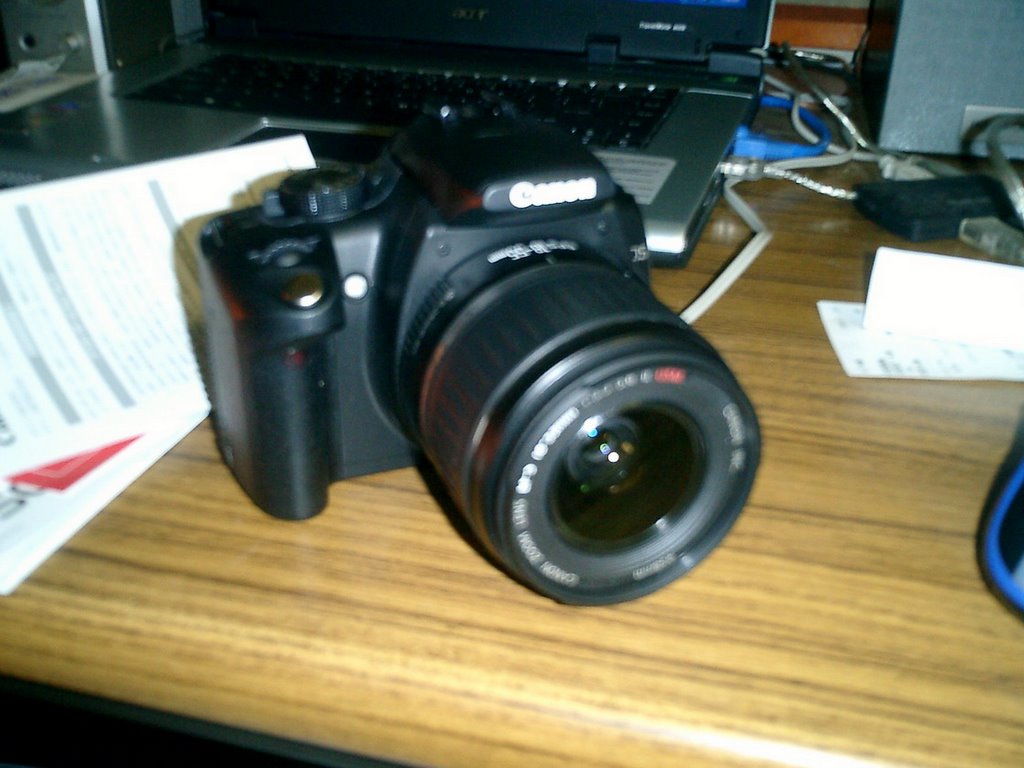
Here's a picture of my new camera (taken with my old camera :)
Here are some of the pictures I took today of my room:
Soysauce close up

Bottle of red wine
Posters on my wall
Initial reaction
My first reaction to this camera is a little overwhelment with all the features. It's not a bad thing. I'm usually good with technology, the only problem is that the instruction manual is all in Japanese. It's going to take a little time for me to sift through all the information... else I'll break down and find an English version somewhere. The camera comes with a set of preset shooting mores including: protrait, senic, sports, night, no flash and close up. There is also varying levels of manual modes where you can play with the arpeture sizes and shutter speeds/exposure times, white balance, color filtering and plenty more. I'm going to have to play the camera
The auto focus works pretty good with the camera being able to focus on a target in about half a second. I hope in the near future, I'll be able to post some great photos of life in and out of Sendai. Which reminds me... I have a back log of photos to post...
Monday, January 09, 2006
He never showed
2~3 weeks ago. I ran into one of the post-docs over the winter holidays while eating at a restaurant back in Sendai after getting back from a great ski trip. He's from France, and that evening, I learned from him that he would be quitting his position at the lab and heading for Europe for an interview for a new position. I was happy for him, though he seemed rather quiet that evening... he even offered to sell me his car, cheap, for $600.
A few days later, I was at the lab working on something over a weekend. I don't remember what, but I was there doing something. I was almost finished for the day to head out for a movie with friends in the evening. I wanted to see Mr. & Mrs. Smith which was released about a month ago in Japan. The post-doc guy was around packing and asked me to come with him for a little bit to the post office to help him send off some of his belongings. He then told me his real reasons for leaving... but I was rather stunned, to say the least, to hear what I heard.
During the drive to the post office, I was told about how he didn't feel secure in this lab. He thought that people didn't like him at this lab. He took a 3 week vacation a while back in the summer. He told me afterwards that he had the feeling (or was told?) that the professors thought that he took a little long of a holiday. He felt guilty about it. It's true, sometimes the Japanese have this impecable ability to make other people feel guilty. Sort of an aside here, but sometimes they don't tell you things straight but there are times where you can read through them... and that was probably what he was sensning. He decided to work harder to catch up and try and not disappoint the professors and then from here on in, it's an obvious downhill story from here on in.
He worked hard, pretty damn hard he said. But somehow he could never impress or make the professors happy. I think that's one thing that's true about Japanese managers, is that they don't know how to give compliments. His theory was that if people started hearing that he was getting compliments/praise from the professors then other Japanese people in the lab would get jealous. His reasoning is that because the Japanese people work so hard (well the people in this lab atleast) that they would get jealous of him because they don't often hear these nice things from their professors. He did one day eventually hear a nice thing from one of his professors... the only problem was that be became paranoid of what the other Japanese students thought of him.
The ball kept rolling... down hill. He got uncomfortable hanging around the other Japanese people in the lab. His desk was in another building where there are less people (like 2 out of the 50 people in the lab) and he decided to hole himself up there for atleast a few months. He didn't join the rest of the lab for lunch or anything. He also started growing a paranoia of the other people at the lab. He felt that they were talking about him... but he didn't know about what. He thought that perhaps they were saying bad things behind his back and he didn't feel that he could trust them.
There's more to it too. Apparently Japan compared to France, their lab safety conditions aren't up to the same standards. The postdoc guy was pretty frank about it. The only problem is that changing how things are done in general is a slow processes. But he kept pushing but was getting no where with it. "What up with that??" At the sametime, he started feeling like the professors were pressuring him more to get more work done because he disrespected them some how and they were out for vengence (and some how they had this plot that they'd grind him down by pressuring him more and more to produce more work). While I am typing this, this story just seems really absurd, but to him, he thought it was a fact of reality.
So at one point, he finally snapped. He had to get out. Within in a week of hearing that he had an interview for a new position and that he would be leaving this lab (talk about counting chickens before they've hatched), the profs recommended that he stay to finish off his project before he left. But he was intent on leaving. He would hear later from the people he would be interviewed by that they had found a potential candidate for the position. His mind jumped out at the possibity that the director of the lab called in to the lab at Sweden to tell them that he wasn't a suitable candidate or something (apparently he didn't list him as a reference).
Paranoia eating at the poor postdoc.
I helped the guy packup, invited him over to my place for dinner. I dropped a messege to another labmate living at the dorm about his condition and that we'd be stopping back for food. He also made some brownies for us while we ate on some turkey stew, we spent the evening comforting him and trying to dispel his paranoia.
I had left my scooter back at the lab since the post-doc was heading back there to collect a few more things, I went with him and spent more time chatting with him. All sorts of paranoias of people not liking him or things working against him came popping out. It's easy to think like that when you don't trust people. In a foreign land, without the ability to speak or understand, you're even more so at the mercy of the people around you. I kept telling him that things aren't like that. Why would a lab spend money on a post-doc just to keep him around and crush him into submission is beyond me. Absurd, I tell you. I told him that too. By the end of the evening, it felt like we came to an understanding, things were clear. I was happy and then went home.
Several days later, I would meet him again during the boxing day of Japan on Jan 2. He was with the Taiwanese gang of the lab, they were all out doing some shopping during the "first sale" event in Japan (read: things sold at discount!). We hit a place for dinner, he was his same old paranoid self. I was rather annoyed about it. It was a little worse this time... he wanted to justify his paranoia. In honesty, I was starting to get a little pissed.
How this guy would decide, around the 4 other people sitting around the table, that people at the lab didn't like him. On several occasions he has spent entire afternoons and late evenings with people with the lab to let off steam. "It didn't make sense, it was silly! A farewell lunch was even organized for you! How can you not see this!? This is inanity!?" that was what I was thinking. I just couldn't see how he could still see from his view point... how could he be so blind?? We talked and talked, but it just never sunk in to him.
Several days passed. Last Friday was the date of his farewell party. The professors showed along with about 12~13 other people that were still around Sendai (the lab was still on holidays). His supervisor has a present for him. The post-doc never showed...
A few days later, I was at the lab working on something over a weekend. I don't remember what, but I was there doing something. I was almost finished for the day to head out for a movie with friends in the evening. I wanted to see Mr. & Mrs. Smith which was released about a month ago in Japan. The post-doc guy was around packing and asked me to come with him for a little bit to the post office to help him send off some of his belongings. He then told me his real reasons for leaving... but I was rather stunned, to say the least, to hear what I heard.
During the drive to the post office, I was told about how he didn't feel secure in this lab. He thought that people didn't like him at this lab. He took a 3 week vacation a while back in the summer. He told me afterwards that he had the feeling (or was told?) that the professors thought that he took a little long of a holiday. He felt guilty about it. It's true, sometimes the Japanese have this impecable ability to make other people feel guilty. Sort of an aside here, but sometimes they don't tell you things straight but there are times where you can read through them... and that was probably what he was sensning. He decided to work harder to catch up and try and not disappoint the professors and then from here on in, it's an obvious downhill story from here on in.
He worked hard, pretty damn hard he said. But somehow he could never impress or make the professors happy. I think that's one thing that's true about Japanese managers, is that they don't know how to give compliments. His theory was that if people started hearing that he was getting compliments/praise from the professors then other Japanese people in the lab would get jealous. His reasoning is that because the Japanese people work so hard (well the people in this lab atleast) that they would get jealous of him because they don't often hear these nice things from their professors. He did one day eventually hear a nice thing from one of his professors... the only problem was that be became paranoid of what the other Japanese students thought of him.
The ball kept rolling... down hill. He got uncomfortable hanging around the other Japanese people in the lab. His desk was in another building where there are less people (like 2 out of the 50 people in the lab) and he decided to hole himself up there for atleast a few months. He didn't join the rest of the lab for lunch or anything. He also started growing a paranoia of the other people at the lab. He felt that they were talking about him... but he didn't know about what. He thought that perhaps they were saying bad things behind his back and he didn't feel that he could trust them.
There's more to it too. Apparently Japan compared to France, their lab safety conditions aren't up to the same standards. The postdoc guy was pretty frank about it. The only problem is that changing how things are done in general is a slow processes. But he kept pushing but was getting no where with it. "What up with that??" At the sametime, he started feeling like the professors were pressuring him more to get more work done because he disrespected them some how and they were out for vengence (and some how they had this plot that they'd grind him down by pressuring him more and more to produce more work). While I am typing this, this story just seems really absurd, but to him, he thought it was a fact of reality.
So at one point, he finally snapped. He had to get out. Within in a week of hearing that he had an interview for a new position and that he would be leaving this lab (talk about counting chickens before they've hatched), the profs recommended that he stay to finish off his project before he left. But he was intent on leaving. He would hear later from the people he would be interviewed by that they had found a potential candidate for the position. His mind jumped out at the possibity that the director of the lab called in to the lab at Sweden to tell them that he wasn't a suitable candidate or something (apparently he didn't list him as a reference).
Paranoia eating at the poor postdoc.
I helped the guy packup, invited him over to my place for dinner. I dropped a messege to another labmate living at the dorm about his condition and that we'd be stopping back for food. He also made some brownies for us while we ate on some turkey stew, we spent the evening comforting him and trying to dispel his paranoia.
I had left my scooter back at the lab since the post-doc was heading back there to collect a few more things, I went with him and spent more time chatting with him. All sorts of paranoias of people not liking him or things working against him came popping out. It's easy to think like that when you don't trust people. In a foreign land, without the ability to speak or understand, you're even more so at the mercy of the people around you. I kept telling him that things aren't like that. Why would a lab spend money on a post-doc just to keep him around and crush him into submission is beyond me. Absurd, I tell you. I told him that too. By the end of the evening, it felt like we came to an understanding, things were clear. I was happy and then went home.
Several days later, I would meet him again during the boxing day of Japan on Jan 2. He was with the Taiwanese gang of the lab, they were all out doing some shopping during the "first sale" event in Japan (read: things sold at discount!). We hit a place for dinner, he was his same old paranoid self. I was rather annoyed about it. It was a little worse this time... he wanted to justify his paranoia. In honesty, I was starting to get a little pissed.
How this guy would decide, around the 4 other people sitting around the table, that people at the lab didn't like him. On several occasions he has spent entire afternoons and late evenings with people with the lab to let off steam. "It didn't make sense, it was silly! A farewell lunch was even organized for you! How can you not see this!? This is inanity!?" that was what I was thinking. I just couldn't see how he could still see from his view point... how could he be so blind?? We talked and talked, but it just never sunk in to him.
Several days passed. Last Friday was the date of his farewell party. The professors showed along with about 12~13 other people that were still around Sendai (the lab was still on holidays). His supervisor has a present for him. The post-doc never showed...
Thursday, January 05, 2006
Sucks to be sick
I came down with a terrible stomach flu yesterday. I don't know how I got it, but it hit me like a 800 pound gorilla. I went to bed the night before and then I woke up the next day, horribly sick. If you would like to know, my stomach has atleast about a 2.0 litre capacity for food. Because I drank 1.5 liters of juice (something in Japan called Calpis which is a sweet yogurt drink) and had an apple for breakfast... then it all (and I mean *all*) came out. I was worried at one point that I'd clog up the sink, that bad. Muscle aches, fevers, strong stomach acid. Not a very plesant day it was yesterday.
That's the one thing I didn't really have my bases covered for life in Japan, me getting sick. All I had was a bottle of Aspirin I brought with me and some anti-biotics I kept around, given to me from a friend a while back. I would have gone out to buy some medicine but we had a wind storm in Sendai, took out the internet connection for the better part of the day.
As for today? I'm doing much better. Less pain, I can eat more bread and the fluids I drink stay mostly down. Picked up a book given to me by a friend and went through about 130 pages in about 2 hours. (I read at about 1 page/minute for a paperback). Started some downloads for some books to read on my computer and took a hot shower.
As for tomorrow? Well I hope I'm back to normal. I have a farewell party to attend. It seems to me that the stresses of Japanese life had gotten under the skin of one of the post docs here and sent his mind for a spin. I'll have to comment on my understanding of Japanese working life later on but for now... I need to get better.
That's the one thing I didn't really have my bases covered for life in Japan, me getting sick. All I had was a bottle of Aspirin I brought with me and some anti-biotics I kept around, given to me from a friend a while back. I would have gone out to buy some medicine but we had a wind storm in Sendai, took out the internet connection for the better part of the day.
As for today? I'm doing much better. Less pain, I can eat more bread and the fluids I drink stay mostly down. Picked up a book given to me by a friend and went through about 130 pages in about 2 hours. (I read at about 1 page/minute for a paperback). Started some downloads for some books to read on my computer and took a hot shower.
As for tomorrow? Well I hope I'm back to normal. I have a farewell party to attend. It seems to me that the stresses of Japanese life had gotten under the skin of one of the post docs here and sent his mind for a spin. I'll have to comment on my understanding of Japanese working life later on but for now... I need to get better.
Tuesday, January 03, 2006
Costs of living in Japan (and on your own) and the value of time
I started logging data of living expenses in Japan since I arrived and now, 9 months later, here's a little something for me to show what living expenses in Japan look like. Click on the image below for a close up.
Currently the Canadian dollar is really strong at the moment meaning that $1 is equal to 100 yen. Over 9 months of living in Japan I have logged 1,136,142 yen worth of expenses. Factoring in the exchange rate, I've spent $11,261 CAD living on my own. On average, I've spent about $1,231/month. Just as a note, my real average is lower than this because I have included a trip to Taiwan in these expenses that ran me about $1,000 bucks for a week.
What have I learned from this data? Well on average, I am spending on average about $10 a day on food (this is with eating out nearly everyday since I can't find the time to cook as often anymore) and that rooming fees cost me about $160 a month (but that is because of the really cheap rent). I will be expecting this cost to increase by $200~$300 when I move out, thus reducing the amout of "disposable" income I will have to play with.
With this information in mind I am able to guess that it costs about $16,000 ish/year to live on your own somewhat comfortably (I could say that my living conditions are pretty comfortable). Just remember that I'm talking about after tax dollars here. Given that Canada (depending on your tax brackets) can hit tax ranges from 40% and 50% (as a guess), you're going to have to earn about $27,000/year (at 40% tax). Take this figure as a bare minimum since you're not saving any money into your bank account. Now, if you're looking to save some cash in your bank acct, say something like $500/month or $6,000/year, then you're going to have to earn $10,000/year extra at 40% tax. In total, you're going to have earn about $37,000/year (pre tax at 40%) under these conditions.
There is a great advantage to learning how to manage finances like this and that is knowing what NOT to buy. Just recently, a friend of mine is returning home to France and has a car to unload. The asking price is exceptionally cheap (read: $600 for the car). After adding insurance, tax, parking and gas over a 2 year period, I calculated that a car would run me an additional $200 bucks a month in costs. Suppose that you are currently saving $500 a month with your current income, you would realize that after buying a car (in this calculation, I didn't include the cost of just buying the car!) that your disposable funds would decrease by 40% (or say by about half!).
I have to say, I was very enticed by the purchase since I'm riding on a scooter through chilly winter air (in wind, rain, snow and more). Wouldn't it feel nice to ride in a car, that's heated, that can carry friends and large goods etc etc? For what it's worth, for all the time I spend travelling outside, taking a ball park 40% loss to disposable income isn't worth it. That's how the math works out.
There is more to this information than just knowing how to make purchases, but knowing how much you need to make (and as a result, what kinds of jobs you should aim for). The math from here on in to figure out what kind of wages you need to achieve say a $37,000/yr life (assuming a 40 hour work week) is about $18/hour. Compare that to what many malls pay university students (ie. In Japan, kids are paid $6~$7/hour for working in stores).
To be honest, it hurts to see people paid that low (and this is turning into another essay but I will continue a little further) because if you think of it like this, suppose that you want to make $100 bucks for a pair of new shoes. Ignoring tax, you're going to have to work 17 hours to get enough for that pair of shoes. Tell me, do you want to work 17 hours for a pair or shoes? I'd try to make my own if that were the case-- I'd come out with a pair of shoes and come out with the ability to make shoes. If there was something that we as people were never taught, it's how to value time.
With knowing how to value time, you also learn how to value yourself. Because if you want a basic $37,000/year life you're going to have to ask yourself "what can I do to bring $18/hour (or more) of value to people?" If you don't know how to answer this question, you'll be working for $7/hour for the rest of your life. *Value your time*
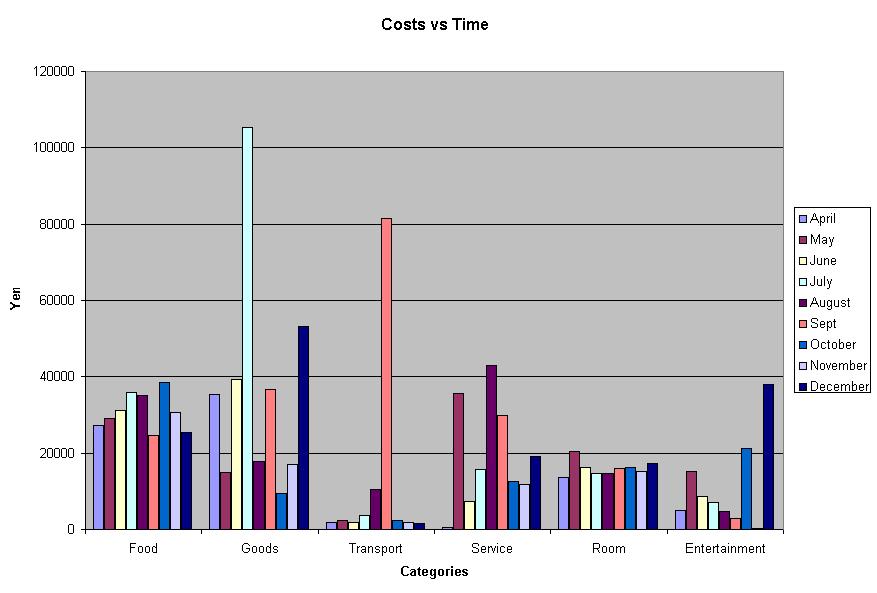
Currently the Canadian dollar is really strong at the moment meaning that $1 is equal to 100 yen. Over 9 months of living in Japan I have logged 1,136,142 yen worth of expenses. Factoring in the exchange rate, I've spent $11,261 CAD living on my own. On average, I've spent about $1,231/month. Just as a note, my real average is lower than this because I have included a trip to Taiwan in these expenses that ran me about $1,000 bucks for a week.
What have I learned from this data? Well on average, I am spending on average about $10 a day on food (this is with eating out nearly everyday since I can't find the time to cook as often anymore) and that rooming fees cost me about $160 a month (but that is because of the really cheap rent). I will be expecting this cost to increase by $200~$300 when I move out, thus reducing the amout of "disposable" income I will have to play with.
With this information in mind I am able to guess that it costs about $16,000 ish/year to live on your own somewhat comfortably (I could say that my living conditions are pretty comfortable). Just remember that I'm talking about after tax dollars here. Given that Canada (depending on your tax brackets) can hit tax ranges from 40% and 50% (as a guess), you're going to have to earn about $27,000/year (at 40% tax). Take this figure as a bare minimum since you're not saving any money into your bank account. Now, if you're looking to save some cash in your bank acct, say something like $500/month or $6,000/year, then you're going to have to earn $10,000/year extra at 40% tax. In total, you're going to have earn about $37,000/year (pre tax at 40%) under these conditions.
There is a great advantage to learning how to manage finances like this and that is knowing what NOT to buy. Just recently, a friend of mine is returning home to France and has a car to unload. The asking price is exceptionally cheap (read: $600 for the car). After adding insurance, tax, parking and gas over a 2 year period, I calculated that a car would run me an additional $200 bucks a month in costs. Suppose that you are currently saving $500 a month with your current income, you would realize that after buying a car (in this calculation, I didn't include the cost of just buying the car!) that your disposable funds would decrease by 40% (or say by about half!).
I have to say, I was very enticed by the purchase since I'm riding on a scooter through chilly winter air (in wind, rain, snow and more). Wouldn't it feel nice to ride in a car, that's heated, that can carry friends and large goods etc etc? For what it's worth, for all the time I spend travelling outside, taking a ball park 40% loss to disposable income isn't worth it. That's how the math works out.
There is more to this information than just knowing how to make purchases, but knowing how much you need to make (and as a result, what kinds of jobs you should aim for). The math from here on in to figure out what kind of wages you need to achieve say a $37,000/yr life (assuming a 40 hour work week) is about $18/hour. Compare that to what many malls pay university students (ie. In Japan, kids are paid $6~$7/hour for working in stores).
To be honest, it hurts to see people paid that low (and this is turning into another essay but I will continue a little further) because if you think of it like this, suppose that you want to make $100 bucks for a pair of new shoes. Ignoring tax, you're going to have to work 17 hours to get enough for that pair of shoes. Tell me, do you want to work 17 hours for a pair or shoes? I'd try to make my own if that were the case-- I'd come out with a pair of shoes and come out with the ability to make shoes. If there was something that we as people were never taught, it's how to value time.
With knowing how to value time, you also learn how to value yourself. Because if you want a basic $37,000/year life you're going to have to ask yourself "what can I do to bring $18/hour (or more) of value to people?" If you don't know how to answer this question, you'll be working for $7/hour for the rest of your life. *Value your time*
Where'd it go?
Happy new year, 2006 right? Year of the dog... da da da more info about my new years later (and the delayed resolutions post comming up later too).
It's a break, but I'm still finding myself occupied. Gone skiing, cooking and attending seasonal parties. It's a tough life, really. Today is sort of my first break of the slew of things that have been going on.
So anyways, right into my post shall we?
If there is one thing that people remember me for, it's for forgetting. The last month was the most interesting in terms of forgetting. I have so far, misplaced 2 pairs of gloves, my binder of notes, left a pair of ski boots at a resort (which is scheduled to arrive via shipment today) and then dropped my cell phone into about 50 cm of snow from one of my side pokects (well this event was just kind of unfortunate).
Aside: After spending a day to search the snow for my cell phone, I gave up the search and decided to buy a new one. I got an e-mail right after buying the cell phone that it was found... I would return a day later to try and return the new cell phone but alas, the store does not take returns on cell phones. Just my luck eh?
After tallying up all the damages from last month, I've probably ran about $200 worth in misfortune. Well life goes on I guess... but $200 is still nothing to sneeze at. One of these days, I was thinking of writing a little article on the "Time value of money." For those that studied economics, some of you might think of Net Present Values and Future Values, but I talk about the time value of money, I think about neither, but that is a discussion for another time.
So what have I learned? My old cell phone survived a scooter running over it (I can see tire tracks on top of the cell), $7 gloves suck against prolonged exposure to the wind. I spent $25 for more expensive gloves, which are thicker and use a material called theminsulate... those *also* suck against the wind (when I talk about wind, I'm talking about sub-zero wind temperatures blowing against the hands). Having ski boots shipped about 150 km costs $13 bucks.
So in the end, even though I am $200 in the hole, I did learn a whole bunch about gloves, cell phone robustness and shipping costs. I'm not at all against paying a little cash for knowledge... there's an upside to everything.
It's a break, but I'm still finding myself occupied. Gone skiing, cooking and attending seasonal parties. It's a tough life, really. Today is sort of my first break of the slew of things that have been going on.
So anyways, right into my post shall we?
If there is one thing that people remember me for, it's for forgetting. The last month was the most interesting in terms of forgetting. I have so far, misplaced 2 pairs of gloves, my binder of notes, left a pair of ski boots at a resort (which is scheduled to arrive via shipment today) and then dropped my cell phone into about 50 cm of snow from one of my side pokects (well this event was just kind of unfortunate).
Aside: After spending a day to search the snow for my cell phone, I gave up the search and decided to buy a new one. I got an e-mail right after buying the cell phone that it was found... I would return a day later to try and return the new cell phone but alas, the store does not take returns on cell phones. Just my luck eh?
After tallying up all the damages from last month, I've probably ran about $200 worth in misfortune. Well life goes on I guess... but $200 is still nothing to sneeze at. One of these days, I was thinking of writing a little article on the "Time value of money." For those that studied economics, some of you might think of Net Present Values and Future Values, but I talk about the time value of money, I think about neither, but that is a discussion for another time.
So what have I learned? My old cell phone survived a scooter running over it (I can see tire tracks on top of the cell), $7 gloves suck against prolonged exposure to the wind. I spent $25 for more expensive gloves, which are thicker and use a material called theminsulate... those *also* suck against the wind (when I talk about wind, I'm talking about sub-zero wind temperatures blowing against the hands). Having ski boots shipped about 150 km costs $13 bucks.
So in the end, even though I am $200 in the hole, I did learn a whole bunch about gloves, cell phone robustness and shipping costs. I'm not at all against paying a little cash for knowledge... there's an upside to everything.
Subscribe to:
Posts (Atom)